Friday, January 11, 2008

GROVES Eco-Club Possibility?

eo All-Star and Win Amazing Prizes!

Enter the Video Contest
12 prizes for Elementary, Middle and High School Students

Technology & Learning and 21st Century Connections is launching a new multimedia video contest to challenge the imagination and creativity of your students. And the great news is that if they win, you win, too!

kid with dv

The list of prizes includes a high performance Lenovo laptop computer , Adobe Digital School collection software , professional development classes , and airfare and accommodations for an upcoming 21st Century Connections event .

To enter, your student needs to create a public service announcement—a short video that showcases why digital learning tools are critical to your school or curriculum. If the video is chosen as one of our 12 winners, you and the student could win a digital prize package that will take you to the next level of digital filmmaking. The contest, sponsored by the 21st Century Connections program, is open to all K-12 students.

Learn more about the Be a Video All-Star Contest

Contest deadline: February 29, 2008

Sponsored by:
Sponsors

Creativity & Innovation, Disruptive (Digital Learning) Technology, Openism, the Larger Conversation! Communities of Practice!


charles leadbeater TEDTalks (video) - TEDTalks : Charles Leadbeater (2005) video

Wednesday, January 9, 2008

MODEL CLASSROOM

The Learning Lab: Science Center Is an Ideal Model for All Classrooms

By Mark Nichol

In my last entry, I described a favorite experience from my short teaching career: the opportunity to use free and freely available science manipulatives and materials to enable hands-on discovery in the classroom. It reminded me of one of the most remarkable learning environments I have ever had the pleasure to spend time in.

While I was still a substitute teacher in a large northern California school district, I covered for the teacher of a science center for Gifted and Talented Education (GATE) children. I met with Mr. Bogardus for a briefing the day before his absence, and although I took charge during subsequent assignments there, that first day I basically assisted his classroom aide.

The science center was a converted house at the edge of a large suburban park, and, in and around the unassuming structure, some vivid learning took place. During an intensive week of study, fourth graders examined animal skulls and identified them by their characteristics, such as the placement of the eyes, the form of the jaw, and the shape of the teeth. They took meteorological readings. They performed experiments and made observations and did everything else scientists do, much of it with little guidance or supervision.

On the last day of their weeklong session at the science center, the students circulated through the small building, visiting various workstations and observing and recording phenomena and data, demonstrating mastery of the skills they had acquired during the week. That was their final exam.

After enjoying my time there, I realized that every classroom -- not just those available in rotation to GATE students for a single week -- should be like the science center. All learning environments should offer young, kinetic learners a place to get on their feet and look, feel, listen, and experience learning with their senses and acquire knowledge and understanding the way adults do, by engaging in authentic activities.

Alas, though when I was hired as a full-time teacher I did give my students experiences with science and math manipulatives, I was never able to comprehensively achieve this vision of active, experiential education in my own classroom. I did observe it once again, however, in another school district.

Mrs. Gillfillan's fourth- and fifth-grade classroom featured shared tables, not desks, plus enough fiction and nonfiction books to stock a small school library and a wealth of implements, artifacts, and specimens. Her students spent a lot of time out of their seats but into their learning, including the occasional overnight field trip. I suspect they remember Mrs. Gillfillan's class to this day.

Classrooms and teachers like these have always existed and have become more numerous in the intervening years. However, bureaucratic directives and regressive legislation have doused many sparks of learning and dampened many young spirits that might otherwise have been animated by creative educational environments and experiences.

But even in our retrograde pedagogical climate, such forward-thinking places like the Science Center still thrive -- we've covered many in our magazine and on this Web site, and there must be many, many more. We hope you'll share with us your efforts to help active learning occur, your knowledge of learning laboratories, and your discovery of -- or professional resemblance to -- great teachers like Mr. Bogardus and Mrs. Gillfillan.

Experiential learning across the curriculum

Submitted by Janice (not verified) on December 24, 2007 - 21:40.

This kind of learning does continue to exsist. In fact I work in a small charter school in the mountains of Arizona where the entire school is made up of classes that are organized with shared tables and designated labs for all areas of discipline. The direct instruction is treated as a lab where students receive individualized instruction for Reading, Mathematics, Writing, and Spelling. There is much more to this than I can list here but my point is that experiential learning is very effective and there are administrators who not only accept this kind of teaching but expect it. I happen to be one of these administrators. This kind of learning takes alot of planning but alot less teaching time managing behaviors. Our inclusive classrooms are flexible enough for our students with Asperger's Syndrome and Autism to be very successful. They lend themselves to some great social experiences that these students wouldn't otherwise have access to.

Monday, January 7, 2008

A Challenge for innovation?

The Fuel-Cell Solution: Promise or Prophecy?
New advances in an old technology hold the potential for clean, quiet power on cruising boats

Mar 1, 2003
By Steve D’Antonio (More articles by this author)
Fuel-cell technology, an energy source invented over 150 years ago, may hold the key to low-polluting or nonpolluting energy independence for the United States, and it incidentally offers the real possibility of quiet, clean power on cruising boats.

Every manned U.S. spacecraft, from the Gemini program of the 1960s to the present-day shuttle program, has used fuel cells to provide electricity and, in some cases, fresh water. More recently, the automotive industry is showing growing interest in fuel-cell development and production. Research has moved beyond the theoretical, and fuel-cell-powered prototype vehicles and electric generators exist and are now being field-tested.

In 1998, Iceland announced a 10-year energy plan that called for all transportation vehicles, including its fishing fleet, to switch to hydrogen-powered fuel cells. And in the fall of 2001, DCH Technology, of Valencia, California, launched and tested an 18-foot water taxi that uses a fuel-cell generator and batteries to power its electric motor. This year, a fuel-cell-powered moderate-displacement sailboat is scheduled to make its debut Related Resources
Fuel Cells on the Web
A Stirling Approach


Solomon Technologies

The ST-74 installed in HaveBlue X/V-1 weighs 128 pounds and delivers 74 pound-feet of torque. Solomon Technologies considers it a suitable replacement for engines in the 35- to 55-horsepower range.
--------------------------------------------------------------------------------


According to the California company that’s developing the boat, the 42-foot Catalina Mark II HaveBlue X/V-1 will be able to make, store, and use its own hydrogen fuel. The boat’s electric drive system, an ST-74 electric wheel made by Solomon Technologies (301-274-4479, www.solomontechnologies.com), currently runs on a bank of batteries so that testers can determine its exact power usage in a range of conditions. Employing two disc-shaped variable-speed DC motors, the drive is regenerative: The motor not only provides electric-powered propulsion; when the boat is sailing, it becomes a DC generator, using the freewheeling propeller as a turbine.

Once testing is complete, HaveBlue LLC, a developer of patent-pending marine power and propulsion technology, intends to tie the electric drive unit to a fuel-cell power plant that uses hydrogen for fuel. In effect, the fuel will come from the ocean. A custom Newport 400 watermaker made by Spectra (415-526-2780, www.spectrawatermakers.com) will provide fresh water, and the hydrogen will be extracted from this by means of electrolysis and stored on board.

By the summer of this year, HaveBlue intends to have the demonstrator boat fitted with a fully self-contained ultra-low- or zero-emission system that can produce and store its own fuel and can provide all the power needed for propulsion and onboard electricity. The company anticipates that the first production units of the system will be available to boat manufacturers in late 2004 or 2005.

Chemical Power
The principle behind a fuel cell has remained unchanged since Welshman William Robert Grove invented what he called a "gaseous voltaic battery" in 1839. Combining hydrogen and oxygen to produce electricity and water, Grove’s "battery" required fuel, in the form of hydrogen, rather than recharging. A fuel cell, like a conventional battery, produces electricity as the result of an electrochemical reaction. Although it uses hydrogen fuel, no combustion occurs, and the electricity- producing component has no moving parts. Unlike a battery, instead of recharging, you simply add fuel to sustain the reaction.

Today, there are several different types of fuel cells: the molten-carbonate, the alkaline, the phosphoric, the solid-oxide, and the proton-exchange-membrane (PEM). Each of these uses a different electrolyte; different ones operate best at different temperatures. Some, such as the solid-oxide fuel cell, require an operating chamber as hot as 1,800 F to work efficiently. The proton-exchange membrane holds the most promise for providing electrical power and propulsion aboard cruising boats, thanks to its power density (the amount of current produced for the unit’s size) and relatively low operating temperature, which is less than 210 F. HaveBlue intends to use this kind of fuel cell on its test boat.

Much like a conventional battery, the maximum output of an individual fuel cell is about 0.6 volts. To produce the required voltage and amperage, several cells are combined (similar to a conventional battery) to form what is called a stack. For instance, Ballard Power Systems’ Mark 900 fuel-cell stack is made up of 400 cells, producing somewhere in the region of 240 volts and 75 kilowatts.

When pure hydrogen is the fuel, fuel cells are virtually emission free, contain few moving parts, and release only heat and water while operating. Fuel cells are robust and can be quite compact; there are even fuel-cell-powered flashlights. Unlike a battery, the discharge from a fuel cell is flat and predictable until the fuel is completely used up. Once that happens, simply refuel and the unit is ready to deliver full power again. But therein lies the problem: There aren’t many hydrogen stations along the highways or waterways of the world.

One solution is to use hydrocarbon fuels. Fuel cells can operate on virtually any fuel that contains hydrogen, such as gasoline, propane, natural gas, methanol, and diesel. But these fuels must first be processed to extract the hydrogen. Most mobile fuel-cell prototypes rely on hydrogen from hydrocarbon fuel and incorporate a component that processes these fuels. Unfortunately, the orphan molecules of this process include carbon monoxide, carbon dioxide, and nitrous oxide—all undesirable "greenhouse" gases (although emitted in levels still lower than that of an internal-combustion engine). And fuel cells running on ordinary hydrocarbon fuels aren’t nearly as efficient as those running on pure hydrogen, which isn’t a very energy-dense fuel to begin with. Compressed to 5,000 pounds per square inch, hydrogen has only 10 percent of the energy density of gasoline.

In the near term, the most likely fuels for mobile fuel cells (which are primarily of the PEM type) are reformed gasoline, propane, and methanol, all of which contain significant amounts of hydrogen. Sadly for cruising sailors, diesel’s complex molecular structure makes it especially difficult to extract the hydrogen, so future research efforts will likely focus on other readily available fuels. But these fuels present their own special problems.
Ordinary gasoline is comparatively high in sulfur, which chokes the PEM’s catalyst, so it can’t be used in fuel cells. It must first be scrubbed of sulfur and other additives that are beneficial to internal combustion engines but toxic to fuel cells. This renders existing fuel refining, storage, and distribution systems incompatible for use with fuel-cell-powered vehicles.
But hydrocarbon fuels aren’t the only option. One solution to the fuel issue involves storing hydrogen in the form of metal hydride in fuel cylinders. Another involves storing hydrogen in the form of sodium borohydride liquid, which is nonflammable and nontoxic. After being catalyzed, hydrogen is produced, along with sodium metaborate, which is essentially borax. Chrysler has fitted one of these borax-powered fuel cells into a minivan, which began testing last April.

Fuel Cells Afloat
The potential for fuel-cell use at sea is significant. Initially, fuel cells will probably find application within generators. Coleman Powermate, in cooperation with Ballard, recently introduced a 1-kilowatt fuel-cell generator, called the Coleman AirGen, for the commercial market. It’s the size of a piece of carry-on luggage, weighs 40 pounds, and is fueled by metal-hydride fuel cylinders. On a cruising boat, such a generator would be somewhat less convenient than a diesel genset because you’d need another source of fuel other than that used by your propulsion engine and because it’s simply less powerful than a conventional diesel generator. The smallest 4-kilowatt diesel genset is roughly twice the size of the 1-kilowatt Coleman AirGen, albeit heavier. However, I suspect that fuel cells will become smaller, more efficient, and less expensive.

Unless a safe, efficient, and inexpensive method of storing hydrogen is found (the borax or metal-hydride methods hold the most promise), then fuel cells for boats are dead in the water. It’s unlikely that special fuels (methanol or reformable gasoline) will make their way to the waterfront anytime soon, and even if they did, many skippers of diesel-powered vessels would be reluctant to give up relatively safe diesel for more volatile methanol or gasoline.

Provided that the fuel-supply problem is solved, the development of a vessel powered entirely by a fuel cell seems promising. A centralized fueling station for fleets of cars or trucks would substantially mitigate the fuel-distribution problem, thus lowering the operating cost. (United Parcel Service is one firm exploring this option.) For boats, fuel stations are already comparatively centralized, so it’s possible that metal hydride, fuel-cell borax, or pure hydrogen could be made available at some of these locations, in addition to gas and diesel.

HaveBlue’s ambitious approach makes obsolete the need for new infrastructure, since the hydrogen fuel is produced on board the boat and stored, possibly in the form of metal hydride, in storage tanks. But if, or how soon, the system will become a practical option for cruising sailors will depend on a number of factors, not the least of which is economics.

One part of the energy equation that’s sometimes glossed over by fuel-cell advocates is the power that’s required to extract hydrogen. Just as electricity must be generated to recharge the batteries of an emission-free vehicle, so the fuel—hydrogen—must be manufactured for the cell. Fuel processing requires power, and the byproducts of this process aren’t always as benign as the emissions of a fuel-cell powered car or boat. To fill this power deficit, HaveBlue says its system will rely heavily on "clean " energy sources, including solar panels and wind generators.

When perfected, fuel-cell technology may someday enable cruisers to ply the waters of the world with energy to spare while producing no harmful emissions. And if the technology truly succeeds, it might well change the world. But for now, at least, fuel-cell technology isn’t the magic bullet that will eliminate our dependency on fossil fuels and halt global warming. It can, however, contribute to both of these goals if it’s developed in conjunction with other technologies.

Steve D’Antonio is the service manager at Zimmerman Marine in Cardinal, Virginia.

Saturday, January 5, 2008

Another Year ANOTHER Global Trade Mission PROJECT!

Automation Alley seeks sponsors for virtual global trade mission for students

Posted on 1/3/2008 8:08:57 PM

Automation Alley, the Troy-based technology business promotion group for Southeast Michigan, said this week it has partnered with the Macomb Intermediate School District, Oakland Community College and Oakland Schools to host its upcoming virtual, student-based Global Trade Mission and is currently seeking sponsors and volunteers.

Automation Alley’s GTM is a business simulation that prepares Southeast Michigan high school students for work in the global economy. With collaboration from business, education, and government, the GTM stands as a regional response to the challenges of the new global economy.

More than 200 students from Genesee, Macomb, and Oakland counties will learn skills for global citizenship; develop business solutions to trade challenges using the tools and information of the global marketplace; work hand-in-hand with business and trade experts; explore emerging careers in the region; and develop team skills to work effectively across diverse backgrounds.

“Offering high school students the opportunity to learn about international business at an early age is key to building our future knowledge-based economy,” said Ken Rogers, Automation Alley executive director. “As the world becomes increasingly flat and our economy diversifies, it is our hope that students explore new career opportunities.”

The GTM this year will be held at the Macomb Educational Service Center in Clinton Township from April 3-5 and Oakland Community College on Feb. 28, 29 and March 1.

Volunteer opportunities include being a cultural ambassador and educating the students on your home country; a cultural or business coach; helping students with their business plans; or a presentation evaluator. Available sponsorships include a Career and College Fair Sponsor at $5,000; a Global Trade Sponsor at $3,500; an Internship Sponsor at $2,500 and a Challenge Sponsor at $1,500. Other sponsorships are welcome.

If you are interested in participating or would like additional information, visit www.automationalley.com or call (800) 427-5100.

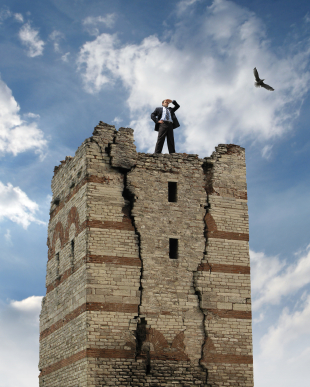
HOW! HARK: A Crack in the Ivory Tower!

« Getting Started With Blogging in the Classroom | Main | A model for permeable classrooms »

Semi-Permeable

An essential concept in the study of biology is that of permeability. As a former biology teacher, it was my experience that students often struggled with this concept and what impermeable, permeable, and semi-permeable meant and how it applied to things such as diffusion and osmosis (you remember those, right?).

Permeability can be applied to other concepts besides biology. Specifically, the concept of permeability can apply to learning communities, and how open and closed they are to their members, and potential members. In a typical high school, learning communities are fragmented and isolated, if they even exist at all. It’s unlikely that any of us would label a typical high school classroom, with its characteristic five rows of six desks, limited access to information and conversation, a learning community. Very little interaction exists within the classroom, and interaction from sources outside the four walls of the classroom is generally non-existent-the classroom walls, in effect, are impermeable.

That certainly can be changed, and the tools (blogs, wikis, social networking, RSS, etc.) we have now at our disposal make it doable and achievable, but many things have to fall into place. Teachers have to be willing, the technology must be available, administrators must understand the need, and the school’s climate and culture, which is greatly influenced by the community that the school serves, must be supportive.

So, as a result, the formation of learning communities in schools depends greatly on the school itself. What is a solution, or a plan, in one school may not be a solution, or a plan, in another. Additionally, even within a school, there may be different needs-some teachers may be ready, others may be not so ready, so that a plan for building learning communities needs to be flexible and scaleable, and provide the necessary infrastructure to meet the varying needs of the different constituents of the school. One size does not fit all...

There is no right or wrong answer to building learning communities, but I do think there is a basic flow.

If the end goal is to help students and classrooms build learning communities with individuals and other schools or classrooms, and make the classroom permeable, you have to start with the teachers. Teachers have to learn the tools, learn how to connect and contribute (typically through a blog), learn how to manage time and feeds, learn how to adjust the membership of their learning community, and learn how to accept being criticized when their ideas oppose those of others. Teachers need to see firsthand the benefits of a learning community, and what it means to their personal learning, before it can ever translate successfully to students. To get learning communities to develop and stick, start with teachers first.

From there, I’m interested in building skills in students that will make them successful when they ultimately join wide-open learning communities. I’m teaching them how to read blog posts, how to collaboratively create content in wikis, how to comment appropriately, how to manage RSS feeds, and how to manage content resources with social bookmarking tools. I'm teaching them how to operate in a community. And I’m teaching them all about safety.

Is this a necessary step? Ask yourself-yes or no? If no, stop reading this post. If your answer was yes, then what’s the best way to do that?

What’s the best way to do that on a large scale, and in a systemic way? Where you can impact the most teachers and the most kids, in the most effective and safe way? I’m not talking just blogging now, I’m talking about building learning communities, which is what I’m interested in. Blogging OK, I get it. But that’s just a part of a larger goal.

You can do all of that in a number of ways. You can do it by asking teachers to manage multiple online tools that all work differently and require different management requirements. Or you can do it with a content management system where all of this is under one roof. And before some of you go CMS on me, you could also do it with Ning, couldn't you?

So, what's the plan? Expose the most teachers and kids to these capabilities, teach them in a controlled environment, where teachers and students, mostly new to the process of working in a learning community, can make their mistakes without too high of a cost? Or maybe the plan is to stay "true to the process" and put the kids out there, really out there, but certainly prepare them prior with what they need to know.

I’ll take Door #1 Bob, the semi-permeable classroom, where true community is first established within the classroom. That’s just me. It might not be you.

I think a classroom must be semi-permeable before it can become a permeable classroom.

Creating a truly permeable classroom is a major change in how classrooms work. It is a big departure from where most classrooms are now. You just don’t change that overnight with a few commonly available tools, and just by blogging. It’ll require a great deal of professional support and curriculum design, with a great deal of reflection and course-correction. I’ll approach that carefully. The stakes are too high not to.

And when the time comes, I’d turn them loose. When the specific curricular needs suggest a permeable experience is warranted, I’d turn them loose. When the teacher says, we need to connect outside of our classroom because of this and this, I’d turn them loose. When the teacher says I’m ready and so are my kids, I’d turn them loose.

But I’m crawling before I’m walking.


images from istockphoto.com

Comments

I've been seriously groping with this issue on my campus lately David. As the tech. specialist for my school I've really taken the tact of keying in on 2 to 3 individual teachers and working with them solely to build their knowledge and comfortability with working with these tools.

From my experience is this, it's not so much the teachers who have been unwilling to change their teaching practices, it's the administrations unwillingness to change from antiquated learning practices. Which to continue with your permeability references, the learning is quite non-opaque

Permeability (even semi-permeability) is more easily said than done. Most teachers (heck, myself too) find it much easier to stay in the rut, in the comfort area, in the "I am in control" area and have to fight daily (even by the minute) with getting past all those barriers that truly allow one (and one's class)to able to be permeable.

It is very hard to take risks -- and most schools are not as fortunate as the school that you work at, that Tom works at, and that I work at that have the capable teacher support that assists, guides, and equips them to feel safe with being permeable. Hopefully, that will continue to change as more educators demand "tech support"!

It is always the baby steps and not the giant leaps forward that get most of us to where we are going. I see evidence DAILY of teachers being willing to open their minds to new ideas, to trying things they have never done before, to becoming "permeable" (if you will).....but it is very hard thing to do. I am just glad that I am there to assist them as they learn to not only be permeable but to also be pliable.

Good post. Lots to think about!

I have been giving this a lot of thought lately. In fact enough thought that I am looking seriously at moving back into the classroom. I think what I need is to prove to myself that I can make it work. Then as a school we can move forward. Then as a district and so forth.

I also think we need more great examples of this working. We need more who are making it work to let their stories into the wild. More like Brian Crosby and Clarence Fisher and others. Then we need to point these examples out to others.

Tom: I think that working with a small group of teachers first is generally a good idea. See what works, what doesn't and build momentum towards the inclusion of more teachers. And I would agree with you on the admin part; how many use these tools and understand their implications for classroom learning? I know of several districts where the administrators do use Web 2.0 tools, and it makes for a completely different set of expectations for teachers. That's a good thing, because the support and the infrastructure to support permeable classrooms is likely to be more available.

Jen: there certainly are many barriers to developing permeable classrooms, and risk -taking is one of them. One of the success stories in my school district has been using a CMS to reduce both the barriers and the risk-taking. We've been successful in helping teachers take those small steps, and over time, this can indeed result in significant change. Unfortunately, while I do agree with you that there are teachers out there who recognize the need for a different type of classroom, and a different type of learning, pressure from high-stakes testing and the enormous pressure of AYP pushes schools is just the opposite direction. I don't think that these are necessarily mutually-exclusive, but in many instances, schools (read administration here)seem to be moving backwards to try and meet these goals.

Kelly: I've given that more than one thought myself. When I left the classroom, none of this was available. Part of me would like to see what I could accomplish with my own students. I do get to work with students on a daily basis, but it's different.

And I agree, the stuff Clarence Fisher and Barbara Barreda, along with Darren Kuropatwa, will help us all understand how to create a different type of classroom.

Thanks for your comments.

Tom: I think that working with a small group of teachers first is generally a good idea. See what works, what doesn't and build momentum towards the inclusion of more teachers. And I would agree with you on the admin part; how many use these tools and understand their implications for classroom learning? I know of several districts where the administrators do use Web 2.0 tools, and it makes for a completely different set of expectations for teachers. That's a good thing, because the support and the infrastructure to support permeable classrooms is likely to be more available.

Jen: there certainly are many barriers to developing permeable classrooms, and risk -taking is one of them. One of the success stories in my school district has been using a CMS to reduce both the barriers and the risk-taking. We've been successful in helping teachers take those small steps, and over time, this can indeed result in significant change. Unfortunately, while I do agree with you that there are teachers out there who recognize the need for a different type of classroom, and a different type of learning, pressure from high-stakes testing and the enormous pressure of AYP pushes schools in just the opposite direction. I don't think that these are necessarily mutually-exclusive, but in many instances, schools (read administration here)seem to be moving backwards to try and meet these goals.

Kelly: I've given that more than one thought myself. When I left the classroom, none of this was available. Part of me would like to see what I could accomplish with my own students. I do get to work with students on a daily basis, but it's different.

And I agree, the stuff Clarence Fisher and Barbara Barreda, along with Darren Kuropatwa, will help us all understand how to create a different type of classroom.

Thanks for your comments.

A directory of exemplar examples of teachers using emerging technologies at different grade levels and within different content areas would be a great asset for all of us working with teachers. How do we collaborate to create such a directory as a dynamic document? Or does one exist already?

Lucie: I'm not aware of any such list, although it would certainly be helpful. A wiki would be the easiest way to do that, in my opinion.

I would point you to the following blogs of educators who, in my opinion, offer best practice classroom techniques, from several perspectives:

Clarence Fisher
http://remoteaccess.typepad.com/

Barbara Barreda
http://dare-to-dream--classroom-technology.blogspot.com/

Darren Kuropatwa
http://adifference.blogspot.com/

Konrad Glogowski
http://teachandlearn.ca/blog/

I would also suggest getting a Twitter account if you do not have one, and follow some of the educators there. There are lots of good ideas there, and it is a logical place to connect with others who share the same passions.

HARK!

Is this the sound of the ole impremeable "ivory tower" cracking?

Take note the students are well on their way over at Students 2.0 http://www.students2oh.org/

I'm sure they would be glad to lend a hand and minds to this effort.

Come on in the waters fine.

Much continued success here.

Best,

Jim

Thursday, January 3, 2008

WHY THINK GREEN?

Some will ask why the tree hugger stuff? Why Green? Who cares about nature and natural laws anyways? Why not just let science solve all our needs? Some people don’t even ask. The Think STEM initiative is for the people that ask and have a need to know. Since time began for cognitive thoughts by people and animals, (yes animals have cognitive reasoning skills also) we have been trying to understand our world.
It is important to establish a common ground about the words Science, Technology, Engineering and Math. The study of Science (1.the state of knowing, knowledge as distinguished from ignorance or misunderstanding) as in the understanding of the world in which we live in . That being basically the physical world but also the transcendent spiritual realm (dreams, religion, spirituality and subconscious). Technology (The practical application of knowledge)as the utilization of the understanding of science thru the application of constructs to tame or conquer the physical laws. Engineering (1.the activities of an Engineer, The application of science and math by which the properties of matter and the sources of energy in nature are made useful. )Math- the Greeks had a root word for mathematical, it was mathanein, translated this means to learn. Mathematics( 1.is the science of numbers, their operations and the interrelationships.) It is basically to assign a place value for all knowledge and to compare the variables and their interrelationships.
Science is the state of knowing as opposed to ignorance and so it is time to understand and apply what we know. The misapplication of technology has brought about the destruction of natural earthly systems that existed to support the complex interrelationships of life. Mathematics has to be applied to understanding the dialectic of the value of the interrelationship of all actions and matter.
(For every action there is a reaction.)Technology as the practical application of knowledge has to manifest the answers necessary to live within the laws of the universe. The Engineers of tomorrow need to be able to apply all four disciplines as efficiently as possible in order to make any substantive positive changes. In all endeavors we must seek the truth, for it shall set us free, free to dance with Life and each other knowing we are living in the light of the truth and reason versus the darkness and ignorance of self centered egotism. In learning how to think one also should develop the discipline to objectively seek the truth and thru these observations and applications of science be able to always self correct their course towards the middle ground of reason and logical applications of living within the Laws of the Universe

WHAT!

photo

Empower teachers, principals

A smarter idea gets left behind in NCLB act

January 3, 2008

BY BARRY McGHAN

A recent state report, that nearly 50% of Michigan high schools failed to meet important goals of the federal No Child Left Behind law, is nothing new. It's the message we've heard for 40 years: Schools are bad and getting worse.

Not surprisingly, the peons of the system -- school principals and teachers -- are offered up as sacrifices by NCLB, in collusion with powerful special interests who control the purse strings and rules of this 19th Century education system we keep trying to whip into shape for a 21st Century world.

Crack! "Teach those kids!"

"If you don't, we'll give them to other schools, leaving you fewer resources to do your job. We expect things to become so hopeless you'll need to have your school reorganized. You'll be out of work!"

Crack! "Have we got your attention, yet?"

This all-stick-no-carrot approach perpetuates a top-down system where power is held by people who have no accountability for the work to be done. The accountability rests on people who have the least control over the situation.

This is crazy.

So, is NCLB a bad law? Yes and no.

The law has a good heart. But that's about all.

At its heart is the idea that all children can succeed in school, no matter their sex, color, family finances, parents' education, home language or any other factor. Beyond that, the law has problems.

For example, it lets states set their own goals for achievement. They understandably set them as low as feasible. Coincidentally, Michigan, desperately deep in recession, decided it could teach its way back to financial health by raising high school standards to unrealistic college entrance levels -- "all students can learn" on steroids.

Producing college-ready students starts in the home for most, and progresses step-by-step through the grades. It takes time. Kids from families unlucky enough to fall below the middle class require special efforts -- preschool, early intervention, and so on. If they missed those benefits, more is needed: special alternative schools and programs. That's a tall order for a state that can barely put a budget together.

The education power brokers -- politicians, state and district bureaucrats, experts in universities and think tanks, teachers unions -- impoverished of ideas, are little help to impoverished students. Commands from on high have not worked. They will not work.

The best the powers-that-be can do is empower the peons to do the job, and get out of the way. Give individual schools the autonomy they need to accomplish their mission as they see fit.

The bureaucracy should give schools decision-making authority, as well as control over most of the resources to implement those decisions. Individual schools need to control at least 95% of the money their students bring into a district.

This idea is hugely threatening to current power brokers. Further, making this transition to a leaner, meaner, more agile system will be very disruptive. At first, schools will flounder, some more than others. It's a price that has to be paid.

Take heart. There are reasons to believe the transition can succeed.

Let me tell you about Lula and Lois.

Grandma Lula taught more than 40 years in country schools in west Michigan. She loved her students, respected their parents, kept a laser-like focus on student achievement. She was a force to be reckoned with, known and loved (or at least respected) throughout the county.

A generation later, Lois, my late mother-in-law, another no-nonsense teacher, had a similar approach to her work with second graders in city schools. Other teachers loved to receive students from her classroom -- they could all read! Students, long gone from her class, kept in touch, as did their parents.

Most of the teachers I've known over 40 years of working in schools are good, honest, responsible people like Lula and Lois, doing their very best to help students. They are beaten down by the bureaucracy, disrespected by the press and much of the public, captives to a system that offers little more than a paycheck as a reason to keep up the good fight.

Many Michigan teachers are ready to take on managing their own schools for the benefit of their students. They need the "daddy-may-I" power brokers to become "sister-can-I-help" coprofessionals. They need a system in which parents have more choices for schooling their children, so that a better match can be found between a school's mission and a family's needs. They need an assessment system that enlightens the task ahead. Something more than ...

Crack! "Do better, or else!"

BARRY McGHAN, 68, of Fenton worked for the Flint Schools for 33 years, 20 as a teacher and 13 in a variety of nonteaching curriculum specialist positions. He retired in 1995 and founded the Center for Public School Renewal (www.publicschoolrenewal.org ). Write to him in care of the Free Press Editorial Page, 615 W. Lafayette, Detroit, MI 48226 or at oped@freepress.com.

What can YOU find in Nature? The art of innovation

BIOMIMETICS
“Go to the ant, thou sluggard” the proverb advises, and scientists today are increasingly searching out interesting animals and plants to gain design insights that will help them create novel materials and compounds. This new field of biomimetics has several facets to it. Some workers mimic natural methods of manufacture of chemical compounds to create new ones (a waterproof glue has been developed by studying the natural adhesive produced by molluscs; current research is trying to create a pollution-free water-based paint by mimicking the way insects’ wings grow and dry). Others imitate mechanisms found in nature (Velcro is said to have been created as a copy of the hooks in natural burrs; new strong but light materials have come from studying the structure of bone). Yet others learn new principles from, say, the flocking behaviour of birds, or the emergent behaviour of bees and ants. The aim is to study the natural processes as a starting point, gain insights and then improve on their performance, which is often slow or susceptible to extremes of temperature.

Tuesday, January 1, 2008

Go Figure!

The New York Times

December 30, 2007
Bright Ideas

Innovative Minds Don’t Think Alike

IT’S a pickle of a paradox: As our knowledge and expertise increase, our creativity and ability to innovate tend to taper off. Why? Because the walls of the proverbial box in which we think are thickening along with our experience.

Andrew S. Grove, the co-founder of Intel, put it well in 2005 when he told an interviewer from Fortune, “When everybody knows that something is so, it means that nobody knows nothin’.” In other words, it becomes nearly impossible to look beyond what you know and think outside the box you’ve built around yourself.

This so-called curse of knowledge, a phrase used in a 1989 paper in The Journal of Political Economy, means that once you’ve become an expert in a particular subject, it’s hard to imagine not knowing what you do. Your conversations with others in the field are peppered with catch phrases and jargon that are foreign to the uninitiated. When it’s time to accomplish a task — open a store, build a house, buy new cash registers, sell insurance — those in the know get it done the way it has always been done, stifling innovation as they barrel along the well-worn path.

Elizabeth Newton, a psychologist, conducted an experiment on the curse of knowledge while working on her doctorate at Stanford in 1990. She gave one set of people, called “tappers,” a list of commonly known songs from which to choose. Their task was to rap their knuckles on a tabletop to the rhythm of the chosen tune as they thought about it in their heads. A second set of people, called “listeners,” were asked to name the songs.

Before the experiment began, the tappers were asked how often they believed that the listeners would name the songs correctly. On average, tappers expected listeners to get it right about half the time. In the end, however, listeners guessed only 3 of 120 songs tapped out, or 2.5 percent.

The tappers were astounded. The song was so clear in their minds; how could the listeners not “hear” it in their taps?

That’s a common reaction when experts set out to share their ideas in the business world, too, says Chip Heath, who with his brother, Dan, was a co-author of the 2007 book “Made to Stick: Why Some Ideas Survive and Others Die.” It’s why engineers design products ultimately useful only to other engineers. It’s why managers have trouble convincing the rank and file to adopt new processes. And it’s why the advertising world struggles to convey commercial messages to consumers.

“I HAVE a DVD remote control with 52 buttons on it, and every one of them is there because some engineer along the line knew how to use that button and believed I would want to use it, too,” Mr. Heath says. “People who design products are experts cursed by their knowledge, and they can’t imagine what it’s like to be as ignorant as the rest of us.”

But there are proven ways to exorcise the curse.

In their book, the Heath brothers outline six “hooks” that they say are guaranteed to communicate a new idea clearly by transforming it into what they call a Simple Unexpected Concrete Credentialed Emotional Story. Each of the letters in the resulting acronym, Succes, refers to a different hook. (“S,” for example, suggests simplifying the message.) Although the hooks of “Made to Stick” focus on the art of communication, there are ways to fashion them around fostering innovation.

To innovate, Mr. Heath says, you have to bring together people with a variety of skills. If those people can’t communicate clearly with one another, innovation gets bogged down in the abstract language of specialization and expertise. “It’s kind of like the ugly American tourist trying to get across an idea in another country by speaking English slowly and more loudly,” he says. “You’ve got to find the common connections.”

In her 2006 book, “Innovation Killer: How What We Know Limits What We Can Imagine — and What Smart Companies Are Doing About It,” Cynthia Barton Rabe proposes bringing in outsiders whom she calls zero-gravity thinkers to keep creativity and innovation on track.

When experts have to slow down and go back to basics to bring an outsider up to speed, she says, “it forces them to look at their world differently and, as a result, they come up with new solutions to old problems.”

She cites as an example the work of a colleague at Ralston Purina who moved to Eveready in the mid-1980s when Ralston bought that company. At the time, Eveready had become a household name because of its sales since the 1950s of inexpensive red plastic and metal flashlights. But by the mid-1980s, the flashlight business, which had been aimed solely at men shopping at hardware stores, was foundering.

While Ms. Rabe’s colleague had no experience with flashlights, she did have plenty of experience in consumer packaging and marketing from her years at Ralston Purina. She proceeded to revamp the flashlight product line to include colors like pink, baby blue and light green — colors that would appeal to women — and began distributing them through grocery store chains.

“It was not incredibly popular as a decision amongst the old guard at Eveready,” Ms. Rabe says. But after the changes, she says, “the flashlight business took off and was wildly successful for many years after that.”

MS. RABE herself experienced similar problems while working as a transient “zero-gravity thinker” at Intel.

“I would ask my very, very basic questions,” she said, noting that it frustrated some of the people who didn’t know her. Once they got past that point, however, “it always turned out that we could come up with some terrific ideas,” she said.

While Ms. Rabe usually worked inside the companies she discussed in her book, she said outside consultants could also serve the zero-gravity role, but only if their expertise was not identical to that of the group already working on the project.

“Look for people with renaissance-thinker tendencies, who’ve done work in a related area but not in your specific field,” she says. “Make it possible for someone who doesn’t report directly to that area to come in and say the emperor has no clothes.”

Janet Rae-Dupree writes about science and emerging technology in Silicon Valley.

NEW YEAR brings NEW BEGINNINGS!

From: mimus12@aim.com [mailto:mimus12@aim.com]
Sent: Monday, December 31, 2007 4:03 PM
To: jfiras@wowway.com
Subject: Creating A Blog for Groves HighSchool

Hi,

I attend Groves Hich School and I wanted to create a blog for our ECO club but, I have a couple questions before I get started.

A Group of people recently came to talk to the club about creating a blog just before break but, even after visiting the website, I do not completely understand the reason for createing a blog.
Also, when you guys spoke to us, you gave us permission to refer to your website in our transcript when aplying for a college. I want to make sure that this website is www.sendenergy.blogspot.com

I would like to know more information.

thanks, Jumi

On 12/31/07, John Iras <jfiras@wowway.com> wrote:

Congratulations for taking the initiative to move forward with the ECO blog. This demonstrated courage moves you past the general student population and into the creative, self starter group that surely will see terrific success now and in the new 21st Century career paths. Jim and I are discussing the sites that would most benefit you and your vision quest.

We will get back to you in the next day or two.

Happy New Year to you and the ECO club.

Best to all,

John Iras
21st Century Digital Learning Environments


Jim Ross: Response to all

John:


Thanks for forwarding!

Jumi:

Thanks for taking the time to respond to the opportunity to develop a GROVES Eco-Club blog-site.

In answer to some of your questions; a blog-site (blog: short for web-log coined in 2004) is basically a centralized "subject-specific" virtual-space on the web that can be authored and accessed by many at their convenience, unlike e-mail or web-sites. You might think of a blog in terms of the e-mail of the 21st Century. Additionally, blogs allow you to simply add pictures and videos, links, etc. A blog-site is also an easy way for "communities of practice" (say the GROVES Eco-Club) to document, share and inform others of their "works in progress," interests and aspirations.

To create your blog-site I would suggest using Blogger at http://www.blogger.com (only because Blogger was acquired by Google recently so we will see some "very exciting" things developing here). You will also have to create a Google Mail account http://www.google.com to utilize Blogger. I will send you an invitation to Google Mail also.

Other things you will need to be prepared for will be of course the Title of your blog-site and additional e-mail addresses for the other Eco-Club members you will invite as authors, members, etc.

If you wish to invite Mr. Iras, jfiras@wowway.com Mr. Bates renewablesjim@gmail.com Mr. Phillips wp01bps@birmingham.k12.mi.us and myself Jim Ross digitallearning@gmail.com please feel free to do so.

You also might wish to visit a recently developed (several weeks ago) student-launched blog-site called Students 2.0 http://wwwstudents2oh.org/ and/or Google Students 2.0 to see what impact these Young People are having on digital learning and 21st Century communications.

I believe adding the SEND blog-site to your resume will be an asset and is accurate as identified.

Please let us know if you encounter any problems, have any questions and/or concerns in your GROVES Eco-Club blog-site creation efforts. Feel free to contact us by e-mail or via land-line below.

Hope the NEW YEAR is finding you and your friends and family renewed and excited about the year unfolding before us. Off to do some serious snow-shoveling.

Best,

Jim

--
Jim Ross
21st Century Digital Learning Environments
41810 Huntington Ct.
Clinton Township, MI 48038
586-228-0608

Well Hello again Jumi!
This is indeed a very happy New Year! So full of promise to be the most creatively rewarding year of your life to date and just the beginning of many more to come! Your decision to share with the world about what the Ecoclub has created at Groves High in the courtyard is very commendable. The Ecoclub has created a habitat for wildlife in the midst of an otherwise unsustainable habitat in the middle of a large school. You then went on to raise the money yourselves to implement and are helping to design the renewable energy system that will power the water features that are a part of this biosphere. How fantastic this is that you would share your knowledge with us and the opportunity to learn with you.
Your participation in Send's blog is relevant but more importantly the blogsite you and the Ecoclub are co-creating is far more meaningful for where you go henceforth in this world, let me rephrase that... where you go into the new world that is now being created thru the agreement that you have valiantly made to share with it some of the answers that will bring about positive social, educational and environmental change.
We toast to Your continuing success!
Sincerely,
Jim Bates
SEND LLC

P.S. Please post some photos of the courtyard on your new blogsite
January 1, 2008 10:21 AM

One Laptop Program attempts to LEAVE NO GLOBAL CHILD BEHIND!

In Peru, a Pint-Size Ticket to Learning

Officials Hope 270,000 Laptops for Poor Youngsters Improve Education System

By Frank Bajak
Associated Press
Sunday, December 30, 2007; A18

ARAHUAY, Peru -- Doubts about whether poor, rural children really can benefit from quirky little computers evaporate as quickly as the morning dew in this hilltop Andean village, where 50 primary school children got machines from the One Laptop Per Child project six months ago.

These offspring of peasant families whose monthly earnings rarely exceed the cost of one of the $188 laptops -- people who can ill afford pencil and paper much less books -- can't get enough of their XO devices.

At breakfast, they're already powering up the combination library/videocamera/audio recorder/musicmaker/drawing kits. At night, they're dozing off in front of them -- if they've managed to keep older siblings from waylaying the coveted machines.

"It's really the kind of conditions that we designed for," Walter Bender, president of the Massachusetts Institute of Technology spinoff, said of this agrarian backwater up a precarious dirt road.

Founded in 2005 by former MIT Media Lab director Nicholas Negroponte, the One Laptop program has retreated from early boasts that developing-world governments would snap up millions of the pint-size machines at $100 each.

In a backhanded tribute, One Laptop now faces homegrown competitors everywhere from Brazil to India -- and a full-court press from Intel's more power-hungry Classmate.

But no competitor approaches the XO in innovation. It is hard drive-free, runs on the Linux operating system and stretches wireless networks with "mesh" technology that lets each computer in a village relay data to the others.

Mass production began last month and Negroponte, brother of U.S. Deputy Secretary of State John D. Negroponte, said he expects at least 1.5 million machines to be sold by next November. Even that would be far less than Negroponte originally envisioned. The price, higher than initially advertised, and the non-Windows operating system that is still being tested for the XO have dissuaded many potential government buyers.

Peru placed the single biggest order to date -- more than 272,000 machines -- in its quest to turn around a primary education system that the World Economic Forum recently ranked last among 131 countries surveyed. Uruguay was the No. 2 buyers of the laptops, inking a contract for 100,000.

Negroponte said 150,000 more laptops will be shipped to such countries as Rwanda, Mongolia, Haiti and Afghanistan in early 2008 through "Give One, Get One," a U.S.-based promotion ending Dec. 31 in which participants buy a pair of laptops for $399 and donate one or both.

The children of Arahuay prove One Laptop's transformative conceit: that you can revolutionize education and democratize the Internet by giving a simple, durable, power-stingy but feature-packed laptop to the world's poorest kids.

"Some tell me that they don't want to be like their parents, working in the fields," first-grade teacher Erica Velasco said of her pupils. She had just sent them to the Internet to seek out photos of invertebrates -- animals without backbones.

Antony, 12, wants to become an accountant.

Alex, 7, aspires to be a lawyer.

Kevin, 11, wants to play trumpet.

Saida, 10, is already a promising videographer, judging from her artful recording of the town's recent Fiesta de la Virgen.

"What they work with most is the [built-in] camera. They love to record," said Maria Antonieta Mendoza, an Education Ministry psychologist studying the Arahuay pilot project to devise strategies for the big rollout when the new school year begins in March.

Before the laptops, the only cameras the kids at Santiago Apostol school saw in this hamlet of 800 people arrived with tourists who visit for festivals or to see local Inca ruins.

Arahuay's lone industry is agriculture. Surrounding fields yield avocados, mangoes, potatoes, corn, alfalfa and cherimoya.

Many adults share only weekends with their children, spending the workweek in fields many hours' walk from town and relying on charities to help keep their families nourished.

When they finish school, young people tend to abandon the village.

Peru's head of educational technology, Oscar Becerra, is betting the One Laptop program can reverse this rural exodus to the squalor of Lima's shantytowns four hours away.

It's the best answer yet to "a global crisis of education" in which curriculums have no relevance, he said. "If we make education pertinent, something the student enjoys, then it won't matter if the classroom's walls are straw or the students are sitting on fruit boxes."

Indeed, Arahuay's elementary school population rose by 10 when families learned the laptop pilot was coming, said Guillermo Lazo, the school's director.

The XOs that Peru is buying will be distributed to pupils in 9,000 elementary schools from the Pacific to the Amazon basin where a single teacher serves all grades, Becerra said.

Although Peru boasts thousands of rural satellite downlinks that provide Internet access, only about 4,000 of the schools getting XOs will be connected, Becerra said.

Negroponte says One Laptop is committed to helping Peru overcome that hurdle. Without Internet access, he said, the program is incomplete.

Teachers will get 2 1/2 days of training on the laptops, Becerra said. Each machine will initially be loaded with about 100 copyright-free books. Where applicable, texts in native languages will be included, he added. The machines will also have a chat function that will let youngsters make faraway friends over the Internet.

Critics of the rollout have two key concerns.

The first is the ability of teachers -- poorly trained and equipped to begin with -- to cope with profoundly disruptive technology.

Eduardo Villanueva, a communications professor at Lima's Catholic University, fears "a general disruption of the educational system that will manifest itself in the students overwhelming the teachers."

To counter that fear, Becerra said, the government is offering $150 grants to qualifying teachers toward the purchase of conventional laptops, for which it is also arranging low-interest loans.

The second big concern is maintenance.

For every 100 units it will distribute to students, Peru is buying one extra for parts. But there is no technical support program. Students and teachers will have to do it.

"What you want is for the kids to do the repairs," said Negroponte, who believes such tinkering is itself a valuable lesson. "I think the kids can repair 95 percent of the laptops."

Tech support is nevertheless a serious issue in many countries, Negroponte acknowledged in a telephone interview.

One Laptop is bidding on a contract with Brazil's government that Negroponte says demanded unrealistically onerous support requirements.

The XO machines are water-resistant, rugged and designed to last five years. They have no fan, so they won't suck up dust; are built to withstand drops from five feet; and can absorb power spikes typical of places with irregular electricity.

Mendoza, the psychologist, is overjoyed that the program stipulates that youngsters get ownership of the laptops.

Take Kevin, the aspiring trumpet player.

Sitting in his dirt-floor kitchen as his mother cooks lunch, he draws a soccer field on his XO, then erases it. Kevin plays a song by Caliente, his favorite band, that he recorded off Arahuay's single television channel. He shows off photos he took of himself with his 3-year-old brother.

A bare light bulb hangs by a wire from the ceiling. A hen bobs around the floor. There are no books in this two-room house. Kevin's parents didn't get past sixth grade.

Indeed, the laptop project also has adults in its sights.

Parents in Arahuay are asking Mendoza, the visiting psychologist, what the Internet can do for them.

Among them is Charito Arrendondo, 39, who sheds brief tears of joy when a reporter asks what the laptop belonging to ruddy-cheeked Miluska -- the youngest of her six children -- has meant to her. Miluska's father, it turns out, abandoned the family when she was 1.

"We never imagined having a computer," said Arrendondo, a cook.

Is she afraid to use the laptop, as is typical of many Arahuay parents, about half of whom are illiterate?

"No, I like it. Sometimes when I'm alone and the kids are not around, I turn it on and poke around."

Arrendondo likes to play checkers on the laptop.

"It's also got chess, which I sort of know," she said, pausing briefly.

"I'm going to learn."

Biomimetics- Natural Capital at work

Ok it's 2008 and time to get to work! But let's have some fun while we are at it, too.

Biomimetics is a true form of Natural capitalism thru the appreciation and Mimicry of Systems found in Nature. This science will avail itself to the participants in the Think STEM initiative due
to start up very soon. There is probably not one area of your life that could not be improved thru the use of biomiecry. It runs the gamut from Architecture to water purification. This is a science that begs for discovery, all it takes is an inquisitive and creatively empowered mind.

Biomimetics, technology that mimics nature By Rhett Butler, mongabay.com July 11, 2005

Engineers, scientists, and business people are increasingly turning toward nature for design inspiration. The field of biomimetics, the application of methods and systems, found in nature, to engineering and technology, has spawned a number of innovations far superior to what the human mind alone could have devised.

The reason is simple. Nature, through billions of years of trial and error, has produced effective solutions to innumerable complex real-world problems. The rigorous competition of natural selection means waste and efficiency are not tolerated in natural systems, unlike many of the technologies devised by humans. For example, gas-powered cars are only about 20 percent efficient, that is, only 20 percent of the thermal-energy content of the gasoline is converted into mechanical work.

Gecko in Madagascar
Biomimetics, also known as Bionics ( a term coined by an American air force officer in 1958), Biognosis, and Biomimicry, has been applied to a number of fields from political science to car design to computer science (cybernetics, swarm intelligence, artificial neurons and artificial neural networks are all derived from biomimetic principles).

Generally there are three areas in biology after which technological solutions can be modeled:

  • Replicating natural manufacturing methods as in the production of chemical compounds by plants and animals
  • Mimicking mechanisms found in nature such as Velcro and "Gecko tape"
  • Imitating organizational principles from social behavior of organisms like ants, bees, and microorganisms

To capitalize on the wealth of designs and processes found in nature, Dr. Julian Vincent, the director of the Centre for Biomimetic and Natural Technologies at the University of Bath in England, and his colleagues have devised a "biological patents" database that will enable engineers to directly tap into nature's ingenuity bypassing the need to consult with biologists that they have come to rely upon for insight into nature's workings.

According to the June 9th, 2005 issue of The Economist, "The idea is that this database will let anyone search through a wide range of biological mechanisms and properties to find natural solutions to technological problems." Currently, Dr. Vincent estimates that "at present there is only a 10% overlap between biology and technology in terms of the mechanisms used" so there is a great deal of potential in this area.

The biological patents database takes a different approach to providing examples of natural biological technologies which fulfill the requirements of a particular engineering problem. As explained in The Economist, instead of searching by a plant or animal's name, an engineer would query the database with a keyword like "propulsion" to get "a range of propulsion mechanisms used by jellyfish, frogs and crustaceans."

There are other ways to use the database as well, including characterizing "an engineering problem in the form of a list of desirable features that the solution ought to have, and another list of undesirable features that it ought to avoid.... So, for example, searching for a means of defying gravity might produce a number of possible solutions taken from different flying creatures but described in engineering terms. 'If you want flight, you don't copy a bird, but you do copy the use of wings and aerofoils,' says Dr Vincent."

While the system only contains about 2,500 "patents" at present, Dr Vincent aims to significantly expand the collection to help engineers identify natural systems and behaviors that might be useful in their engineering challenges. There is great hope that biomimetics will help mankind develop technologies that both reduce our impact on the environment around us and improve our quality of life.

Some examples of biomimetics in action:

  • Velcro resulted in 1948 from a Swiss engineer, George de Mestral, noticing how the hooks of the plant burrs stuck in the fur of his dog.
  • The Defense Advanced Research Projects Agency (DARPA), a research and development organization for the U.S. Department of Defense (DoD), and NASA are studying the navigational systems and locomotive strategies of insects to design the next generation of autonomous robots and vehicles.
  • Using a wind tunnel, researchers have found that the flipper of the humpback whale is a more efficient wing design than the current model used by the aeronautics industry on airplanes.
Engineers are working to apply the aerodynamic findings to future airplane and automotive design. Similarly, engineers at Airbus, a European airplane-manfacturing firm, have used the rough skin of the shark as inspiration in developing a striated foil coating for the wings of aircraft, a design which has resulted in six percent less friction and improved fuel efficiency.

A research team at Bell Labs has found that tropical deep-sea sponge, Euplectella or Venus's Flower Basket, builds remarkably strong structures from extremely fragile materials, according to a press release from Lucent Technologies. This discovery led to unique insights in the production of commercial fiber optic strands. The same team also looked to the visual systems of brittlestars -- sea creatures related to starfish and sea urchins -- for inspiration to improve lens design.

"Gecko tape" is a product under development that has been inspired by the lizard's ability to climb up walls and walk along ceilings. The tape exploits "van der Waals forces" -- weak intermolecular attractive forces -- by mimicing the tiny hair-like structures, called setae, that cover geckos' feet.

Scientists at the University of Leeds in Great Britain are studying the jet-based defense mechanism of the bombardier beetle to see if the insect can help them learn how to re-ignite a gas-turbine aircraft engine in mid-flight. The bombardier beetle is capable of spraying would-be predators with a high-pressure stream of boiling liquid.

DaimlerChrysler is developing a new high fuel efficiency concept vehicle based on the body shape of a boxfish, a common cube-shaped fish found in tropical marine habitats. The bionic car will offer 20 percent lower fuel consumption and up to 80 percent lower nitrogen oxide emissions according to a release from DaimlerChrysler.

Boxfish, photo courtesy of DaimlerChrysler

Bionic car, photo courtesy of DaimlerChrysler Some potential areas for exploration:

Spiders spin silk that is stronger than synthetic substances developed by man but require only insects as inputs.

Diatoms, microscopic phytoplankton responsible for a quarter of all the photosynthesis on Earth, make glass using silicon dissolved in seawater.

Abalone, a type of shellfish, produces a crack-resistant shell twice as tough as ceramic from calcium found in seawater using a process known as bio-mineralization.

Trees "turn sunlight, water, and air into cellulose, a suger stiffer and stronger than nylon, and bind it into wood, a natural composite with a higher bending strength and stiffness than concrete or steel," as noted by Paul Hawken, Amory and L. Hunter Lovins in Natural Capitalism.

Countless plants generate compounds that fight off infection from fungi, insects, and other pests. In the near future, consumers should expect to see increased use of biomimetics to improve efficiency of human designed products and systems through the application of pragmatic natural solutions developed by evolution.

This article used information from Wikipedia, DaimlerChrysler, The Economist, Centre for Biomimetic and Natural Technologies at the University of Bath, Natural Capitalism, The New Scientist, and other sources listed in the text of the piece. To learn more about biomimicry and related topics, take a look at The Biomimetics Network for Industrial Sustainability and Biomimicry.net.

Select a News Topic MAIN INDEX SEE ALL SECTIONS Africa Amazon Amphibians Animal Behavior Biodiversity Biomimicry Borneo Brazil Carbon Finance China Climate Change Congo Conservation Coral Reefs Deforestation Economics Energy Extinction Featured Green Business Green Design Happy-Upbeat Hurricanes Indonesia Interviews Logging Madagascar Oceans Pollution Positive News Primates Rainforests Wildlife ALL TOPICS News index | RSS | Add to MyYahoo!

Organic Apparel from Patagonia | Insect-repelling clothing
MONGABAY.COMMongabay.com seeks to raise interest in and appreciation of wild lands and wildlife, while examining the impact of emerging trends in climate, technology, economics, and finance on conservation and development (more) CONTENTS
RainforestsTropical FishNewsMadagascarPictures
Kids' SiteLanguagesBlogForumNewsletter
AboutContactArchivesInternsHelp

Enter your search terms Submit search form

SUPPORTHelp support mongabay.com when you buy from Amazon.com

POPULAR PAGES
RainforestsRain forestsAmazon deforestationDeforestationDeforestation statsWhy rainforests matterSaving rainforestsDeforestation statsRainforest canopyNewsMost popularWorth saving?Forest conservationEarth DayPoverty alleviationCell phones in AfricaSeniors helping AfricaOil palm in rainforestsExtinction debateExtinction crisisExtinction debatePalm OilBorneoOrangutans in BorneoInterviews
T-SHIRTS
Madagascar Wildlife
Dancing lemurs
Don't fall asleep the sloths will eat you
Sucking on this frog may make you insane
CALENDARS
Mount Kenya
East Africa Safari Wildlife
Kenya's Turkana People
Peru
African Wildlife
Alaska
China
Madagascar Chameleons
CANVAS BAGS
Hallucinogenic frog bag
Madagascar wildlife bag

Copyright mongabay 2007

Monday, December 31, 2007

TOPPING OUT THE YEAR

In closing out the first year for Sustainable ENergy Delivery(SEND TM) We wish to share with each of you some of the highlights we've experienced.

SEND was established as a vehicle to create Learning environments in the real-world where each of the participants can be empowered to explore the outer reaches of their creative and cognitive capacities.

SEND was very fortunate to team up with 21st Century Digital Learning Environments in working collaboratively to create these opportunities for personal and institutional growth.

The United States is at a Crossroad. We have lost our manufacturing economic competitive edge and our educational system is rated 17th & 27th in the world in Math & Science respectively. We believe if there ever was a case for war it is for a war against the ignorance of these facts.

Our intent is to help America and each of it's Young People find it's spirit to win this war by empowering each participant in these real-world learning environments to become aware of their creative potentials. It is our intent that these learning opportunities will be replicated as rapidly as possible.

If you are making any new years resolutions perhaps you will consider empowering your own creative potential.

It is time to make new agreements and the following book holds a key for personal growth that can empower you to unshackle your creativity by understanding how past aggreements in your life may have held you back and how new ones can propel you forward.

The Four Agreements TM
by Don Miguel Ruiz

1. Be Impeccable With Your Word
Speak with integrity.
Say only what you mean.
Avoid using the word to speak against yourself or to gossip about others.
Use the power of your word in the direction of truth and love.

2. Don't Take Anything Personally
Nothing others do is because of you.
What others say and do is a projection of their own reality, their own dream.
When you are immune to the opinions and actions of others, you won't be the victim of needless suffering.

3. Don't Make Assumptions
Find the courage to ask questions and to express what you really want. Communicate with others as clearly as you can to avoid misunderstandings, sadness and drama.
With just this one agreement, you can completely transform your life.

4. Always Do Your Best
Your best is going to change from moment to moment; it will be different when you are healthy as opposed to sick.
Under any circumstance, simply do your best, and you will avoid self-judgment, self-abuse and regret.

2008 promises to be a year for many positive changes . Our intent is to create learning opportunities for people who have made a new aggreement to change their life thru discovery of exploration into the outer reaches of their creative capacities.

It is up to each of the participants to decide whether they will use these discoveries to make positive changes in themselves and then to share this with their world.