Saturday, October 18, 2008

Summary View-Point on Creative Cities Summit

Creative Cities Summit 2.0 Recap by Arnold Weinfeld
Director of Public Policy & Federal Affairs for the League

Monday

October 13, 2008

This week, the second-ever Creative Cities Summit will be taking place in Detroit at the Renaissance Center. The League has been working with event founder Peter Kageyama and a host of other organizations over the last several months on putting together an event that will feature speakers from around the world with knowledge and experience in creating vibrant communities. I'm looking forward to hearing from people such as Richard Florida, Charles Landry, John Howkins, Doug Farr, Bill Strickand and a host of others. Session content covers a wide array of topics from cities and universities; attracting and retaining talent (this one features League CEO Dan Gilmartin); design; marketing and media; transportation; music and creativity; and sustainability, just to mention a few. It all starts today and runs through Wednesday. I'll be reporting highlights throughout the week. For a full agenda check out www.creativecitiessummit.com.

Tuesday

October 14, 2008

As the Creative Cities Summit opened on Monday in Detroit, Karen Gagnon, Cool Cities director and CCS2 (Creative Cities Summit 2) co-producer, asked people to take away one big idea. Yet the first day speakers revealed several concepts that when woven together bring to mind the big idea that cities hold the key to creating the environment necessary for creativity.

As Pier Giorgio Di Cicco, author of The Municipal Mind noted, creativity is impossible without the civil encounter, for the city is the place where one discovers his/her destiny through others. Di Cicco also spoke about how risk taking is essential to creative economies as much as good urban citizenship is a key to knowledge economy. He was followed by John Howkins, one of the first to publish ideas on creativity and innovation in the 2001 work, The Creative Economy, and a consultant who has worked in over 30 countries—most recently in China. He began by noting how China will achieve in 30 years, the kind of urbanization it took Europe nearly 2,000 years. Howkins said the creative economy sees more failures than the service or manufacturing economies and that global competition in the 21st century is minds vs minds and copyright vs copyright, or minds working with other minds. He set forth his principles of 'creative ecology' whereby everyone is considered to be creative; creativity needs freedom and freedom needs markets. Howkins said creativity is not simply art or innovation but imagination, dreams, new concepts, design, culture, style, and meaning.

Freedom is dialogue, collaboration, education, training, learning, and acceptance by family/friends/society. The market is the marketplace of ideas as evidenced through information content and the internet. The creative ecology is one where diverse individuals express themselves in a systematic and adaptive way using ideas to produce new ideas. According to Howkins, the six indicators of the creative ecology are systems, diversity, change, learning, adaptation, and sustainability. The next billion of those looking for work will go to creative cities to join the creative ecology.

Bill Strickland concluded with his inspirational story of the Manchester Craftsmen's Guild and Bidwell Training Center in Pittsburgh, PA. Strickland's story and his vision are built around the premise that provided the right environment, people will go into the world as assets, not liabilities. To say the least, the first day of the summit was a day for listening and learning. Tuesday we'll hear more thoughts on the creative economy, creative city, and creative design from thinkers such as Richard Florida and Charles Landry, sustainable urbanist Doug Farr, as well as Ben Hecht of Living Cities and Tom Wujec of Autodesk, with breakout session topics covering LEED neighborhood development, transportation, and a discussion on the Midwest as a mega-region. Something tells me that it will be another day of big ideas. Stay tuned to more from the 'D' on these and other goings on at the CCS2!

Wednesday

October 15, 2008

You'll recall that I mentioned yesterday that if Monday's sessions were any indication then those speaking Tuesday would also have some big ideas for us to consider. Well I and those in attendance were not disappointed! The day began with Tom Wujec of Autodesk. Autodesk is the Oscar-winning industry leader in 3D computer animation technology. Tom discussed how teams foster their creativity, that innovation is the capacity to encourage imagination. He was followed by Ben Hecht, President and CEO of Living Cities. Living Cities is a national community redevelopment initiative that looks to improve the built environment in under-developed neighborhoods. Ben sees cities as the solution for solving America's problems—leading us into the green economy and building a new urban ecosystem through strong neighborhoods. He noted that venture capitalists are funding 'clean technology' initiatives right behind information technology and bio tech.

We then heard from Doug Farr, a Detroit native and an architect, planner, and author of the book Sustainable Urbanism. Doug spoke about the foundations of sustainable urbanism—smart growth, green buildings, and new urbanism. He said that we need to change our culture and our systems when it comes to thinking about efficiency and sustainability, including fixing codes and reversing regulations. He noted that a part of the 2030 Communities Campaign is to reduce vehicle miles traveled; it is wrong to think we can all buy fuel efficient vehicles and drive more or build larger buildings simply because they’re 'green'.

Richard Florida was the lunch keynote speaker, and although he made the circuit a few times a number of years ago after penning the book The Rise of the Creative Class, it was the first time this writer had seen him speak. He has a new book out now titled Who's Your City? and his speech ran the gamut of topics from the current financial crisis to the role cities must play in providing the means for creativity. Florida opined that we are in the midst of a fundamental economic transformation and that the current worldwide financial crisis is not analogous to 1929, but rather to the late 1800s—the last time the world saw great economic system change. The change taking place now according to Florida is the move to a creative economy where the only real capital left is human capital or creativity. The old models of recovery are bankrupt and the only way out is through our communities. He noted that at the turn of the 20th century only five percent of the US was in creative economy; even in 1980 it was only 15-20 percent...now it is 33 percent. Creativity doesn't respect social boundaries...it has nothing to do with race, disabilities; etc. Rather than a “melting pot” he said we are now a “mosaic society” where an individual can keep their culture, their identity, and enjoy the culture and identity of others. Arts, culture, and entertainment are as important today as business, finance, and technology. In order to provide the means for fostering creativity, cities must provide 1) physical and economic security; 2) economic and civic opportunity; 3) leadership to activate the creativity; 4) open mindedness and being welcoming to all; and 5) quality of place including integration with the natural environment. And this just got us through lunch! I'll continue with more tomorrow including thoughts from Charles Landry and a historic roundtable discussion.

Thursday

October 16, 2008

Day 2- Part 2

When I left off yesterday, Richard Florida had just given his manifesto of the way things are now and the way they should be. And, whether you’re a Richard Florida fan or not he definitely gives one something to think about.

Which takes us to after lunch on Tuesday and Charles Landry. Landry is known for his work on creativity and its uses and how city futures are shaped by paying attention to the culture of a place. He too has written books, his most recent, The Art of City Making focuses on how cities can be more "creative for the world." His comments reflected that belief as he noted that the art of city making in the 21st century is the art of living together. He said that there are many ways to look at a city but that first and foremost is its history and creativity. Having a strong arts and cultural heritage is synonymous with the creative economy. He noted that one of the challenges facing us is what to do with smaller 2nd-6th level cities. What is the emerging advantage when every city is chasing talent and being creative—it is values driven development connecting to a bigger picture. Cities need to learn to keep the best and reinvent the rest through capital assessments.

Landry also dug down into city organization providing a means by which cities must be open through a "creative bureaucracy" or one which is strategically principled but tactically flexible. One that is open to collaboration and partnership with its citizens and greater community.

Following Landry was a roundtable discussion which, for the first time, brought together the three people—Landry, John Howkins and Richard Florida—who for the past decade have spent their time writing and speaking about the creative economy, creative class, and creative city. The discussion was moderated by CEOs for Cities director Carol Coletta and a lively discussion ensued weaving together the thoughts of these thinkers. Some of the comments included Florida saying that the most basic right of any person is to be able to fully explore your talent through self expression and that cities must stop doing dumb things. They need to conserve resources, empower community groups. Reflecting on the current worldwide situation he noted that "a crisis is a terrible thing to waste.” John Howkins noted that creativity needs freedom and that we need to be investing in people. Landry noted that we have to shift the rule system away from the plantation mentality of the industrial system.

As full as the morning and afternoon session were, there was a after-dinner session with representatives from Google, MSU, U-M and WSU as well as private business and Lansing Mayor and MML Board member Virg Bernero to discuss cities, universities, and talent. Nearly everyone agreed that all need to work better together at retaining talent in Michigan.

Tuesday CCS2 sessions were about as full as they get with concepts and ideas on how we need to move forward to secure a better future. And after hearing speakers for the first two days, one thing is indeed clear... the world economic platform has changed to one in which brains are the new capital, not brawn. Those cities, states, regions, and countries that understand this and put in place systems that will encourage creative activity and growth in their communities will grow themselves.

Friday

October 17, 2008

After two days of speakers and presenters giving us more than one "big idea," the last day of the CCS2 was drill down day as many session speakers were from organizations working on the ground implementing those very ideas that help to create vibrant cities. In the opening plenary session, Doug Rothwell (president of Detroit Renaissance) and Kelly Lee (executive vice president of Innovation Philadelphia) spoke to their respective efforts at working to create places that will attract young, talented people. That was followed by breakout sessions involving such topics as music and economic development, planning for the creative city, and race and the creative city. This last topic explored the challenges, triumphs, and lessons learned from urban, creative professionals as they worked through racial barriers to spur social and economic innovation. The luncheon speaker was Diana Lind, editor of the magazine Next American City which seeks to link young, urban organizations around the country in an effort to engage that constituency in a quest for more livable cities. The afternoon sessions included discussions on storytelling or how to relate the authenticity of a place; the future of creative expression for cities; creative industry incubators; and a session on the city's role in attracting and retaining talent, featuring League CEO Dan Gilmartin.

The final keynote speaker of the conference was Majora Carter. A life-long resident of the South Bronx, Majora spoke of her belief that one should not have to move out of your neighborhood to live in a better one, and acted upon that belief by founding the non-profit environmental justice solutions corporation, Sustainable South Bronx (SSBx). Her first project was obtaining a federal planning grant for the South Bronx Greenway Project which led to the first new South Bronx water front park in over 60 years. She has continued to work on projects to improve her neighborhood, one of the poorest in New York City. Since starting the Bronx Environmental Stewardship Training Program in 2003, an urban green-collar job training and placement system, she has since partnered with Van Jones on a national green-collar job agenda. Majora is a inspiration to anyone working to make their corner of the world a better place.

For me, this three-day conference re-affirmed my belief that communities hold the key economic prosperity. It helped to coalesce those ideas and strategies that will help me in my work with communities in Michigan. One thing is clear, public and private sector leaders and citizens must understand that a new economic platform is upon us—one that is based around knowledge and creativity, where human capital is the most important element. Those that do and who work together to put in place systems that will encourage creative activity and growth; these are the places that will grow themselves.

I'm glad to be part of an organization that is working with communities in Michigan to help them move forward. Join us.

AT OUR CORE: A Quantum Jump or Leap of Faith

ASCERTAINMENT!


ON the ACT and ART of "FREELY REVEALING"

http://opensource.mit.edu/papers/evhippel-voluntaryinfospillover.pdf

Friday, October 17, 2008

The Real Deal

There has been a lot of discussion about creating immersive real world learning environments in these blog pages over time. It finally dawned on me just why that sounded vagely out of focus an application of the intent. The reality is that these real world learning environments have always existed around us, so we are not "creating them". Although intuitively it has always been apparent that what we endeavor to create is the absence of the mental and societal roadblocks and other impediments that keep individuals from accesing their innate curiosity and creative capacities about this real world that has always surrounded us. The new math equation is that the ABSENCE of the negative and self limiting agreements that has kept individuals from these realizations has real value.
False value as we have witnessed in the recent meltdown of the so-called global markets has been accrued because of the misapplication of natural resources. The Natural Laws that govern life's carrying capacity on the Earth have been broken and tampled upon. Real value can only be realized from working with Life to increase it's bounty soas to lay the foundations for future generations of all Life's species. Value is inherent in the creative ideas yet unborn from all innocent minds. We are seeking intellectual and spiritual buy-in to the proposition that all people are created equal and it is a natural law that everyone be given an unfettered opportunity to pursue the development of their creative capacities. Only then will people really begin to understand what real and sustaining value really is.
Creating a dialouge that brings to the light of day the quantitative and real value added application of using current communication and digital technologies combined with the appreciation of allowing and encouraging each individuals access to their creative learning capacities is the achievable difference that is the real intent of this blogsite.
So if you understand the need to accomplish these objectives and the real value that will be realized from individual creative and intellectual empowerment then let's hear about it!
Posted: Thursday, 16 October 2008 4:46PM

Everything You Always Wanted To Know About Wind Power

With Michigan's growth in wind energy dependent on community adoption of the necessary wind siting laws, Michigan Citizen Planner is offering a "What You Need to Know about Wind Energy Siting and Policy Issues" workshop at nine locations throughout Michigan during December.

Sponsored by Michigan Farm Bureau and Michigan State University, the three-and-a-half-hour workshops will provide planning and zoning officials, local leaders, concerned citizens, farmers and landowners interested in wind the tools and resources necessary to create and implement a strategic plan for wind energy development in their communities.

In response to the state's recent passage of a law mandating utilities generate 10 percent of their power from renewable sources by 2015, wind power companies are prospecting for new sites in communities to locate wind turbines.

Michigan Citizen Planner, a Michigan State University Extension program within the Land Policy Institute, is working to assist communities in taking advantage of this plentiful renewable energy resource in Michigan and encourages all Michigan communities to avoid public discord and uncertainty by proactively adopting planning policies and regulations before they receive an energy facility siting application.

The Wind Siting and Policy Issues workshops will cover an array of related issues, including:

* Current status of wind energy development in Michigan
* Important policy guidelines and new legislation
* Siting and zoning guidelines for wind power development
* Key steps to develop and implement local zoning regulations
* Essential resources, model codes and Michigan examples

Visit www.citizenplanner.msu.edu and click on "Training Info & Calendar" at the top of the page for workshop locations and dates or to register for the workshops.

The MSU Land Policy Institute focuses on research and outreach related to land use and strategic growth in the New Economy. The Institute delivers innovative solutions, transitioning knowledge from land use experts to the community. The Land Policy Institute was founded in 2006.


© MMVIII WWJ Radio, All Rights Reserved.

Tuesday, October 14, 2008

Sunday, October 12, 2008

The #1 Renewable Energy is Manifested Through Self Directed Learning

To reaffirm the focus of our intentions is to empower people to locate and maximise the usage of the most important, yet the most undervalued and underutilized Renewable Energy known to Humanity. That is the energy of the Creative Spirit. Locked within this energy is the ability to accomplish incredible feats large and small. This is the reason We must develop the STEM Centers capacities to allow students and teachers alike to journey into realms of the unknown, places we have never been before. It is on this journey that the real answers to creating a sustainable society will spring forth. Yes, the Creative Spirit free from the gravity of the Dogma that weighs it down in traditional Learning environments is our only hope of leaving this place alive. For without the answers that lie hidden just beyond the common conceptions, society will continue to make the same mistakes that brought us to this precipice. And that outcome is...? Join us for the greatest journey you will ever take....Think STEM
There is a common theme to each STEM Center in that the modus operandi is to engender an engaging learning environment that becomes second nature. The discovery of all you are curious about, especially yourself and what it is that makes you and the world tick. How can you solve enough of the questions to make you feel satisfied that it is enough for one day and come back at it tomorrow. Have you ever had someone engage your mind by showing you that your thoughts and who you are really matters? Did they do it by asking the questions that led to more self directed questions? Could you imagine being immersed in a learning society that approached problem solving in teams that thrived on discovery of how to work with nature and the truth to create a living organic document. A document that, as stated is alive and organic, able to adapt to the ever new understandings of how to recreate healthy individuals and communities. The originators of the STEM Learning Centers endeavor to create safe learning environments and habits that will maximize the individuals creative abilities and longings. We are calling all minds to step up to the plate and play ball!

Saturday, October 11, 2008

Thursday, October 9, 2008

MAP for Solar Installations

Solar Map Sheds Light on Photovoltaic Installations


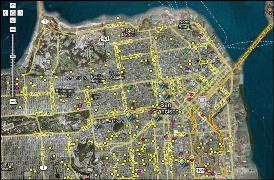
The San Francisco Solar Map represents all residential and business locations that have solar power installations.

Oct 6, 2008, By Elaine Rundle

Found in: Green Initiatives

Cities are rolling out solar maps to let residents see who in their community has a solar installation and also learn about how much energy could be harnessed if their roof were decked out in solar panels.

The San Francisco Department of the Environment launched the San Francisco Solar Map after the city set a lofty goal: to have 10,000 roofs equipped with solar power by 2012. The current count is 871. The solar map's goal is to offer residents and business owners a simple tool to learn about solar installation.

"We wanted something that would help people in San Francisco, that would break down some myths about installing solar in San Francisco, and then offer a tool to people who were interested in solar but didn't really know how to take the first step," said Johanna Partin, renewable energy program manager of the Department of the Environment.

The city presented the idea to engineering firm CH2M HILL in spring 2007. According to Ryan Miller, lead technologist for solar mapping initiatives for CH2M HILL, the solar map combines aerial photography, GIS software and client-supplied data, such as parcel maps and information from the tax assessor's database.

There are two aspects to the solar map: mapping existing solar installations and providing information for residents and business owners who are interested in installing solar panels.

Existing solar installations data points are mapped through the portal, incorporating characteristics of each installation, including system size, the amount of electricity it generates, the installer, a link to the installers' Web site, and an opportunity for the home or business owner to post photos and quotes. This information is displayed after users click on a dot on the map that represents each location where photovoltaic systems are installed.

For citizens interested in solar there's the option to type their address into the Web site and the technology identifies shading obstacles on the roof, such as HVAC units, skylights, perimeter walls or a taller building that could block sunlight, said Dave Hermann, client solutions director of CH2M HILL.

"It takes out the unusable space," Partin said. "It takes out the kind of north-facing side of the roof, if it's a pitch roof. It takes out the shaded areas; it takes out roof obstructions and those kinds of things."

The site estimates the amount of carbon dioxide that would be reduced, power output and system cost and size.

San Francisco uses Google Maps as the platform, but CH2M HILL said it is also able to create maps using Microsoft Virtual Earth and is working on implementations using ESRI solutions.

San Francisco hasn't yet received feedback from citizens that the solar map directly led to solar installation, Partin said, but the department has heard that potential customers use information garnered from the site when speaking with solar installers. She suspected the main driver is city grants for residents who install solar power.

The complete article will be published in the January 2009 issue of Government Technology.

Sunday, October 5, 2008

Critical Thinking, Judgment, Complex Problem Solving, Creative Thinking, Communicaton and Collaboration

Wed, Sep 10, 2008

Report: Teach 21st Century Skills - or U.S. Will Fail

Business Leaders draws link between education, economy. U.S. schools must teach 21st-century skills for the nation to be globally competitive, it says.

From eSchool News staff and wire service reports

A new report urges U.S. schools to create 21st-century environments in classrooms.

Creating a 21st-century education system that prepares students, workers, and citizens to triumph in the global skills race is the central economic competitiveness issue currently facing the United States, according to a new report from the Partnership for 21st Century Skills (P21). The report provides a sobering wake-up call for the nation's civic and education leaders.

The report, called "21st Century Skills, Education, and Competitiveness," argues that for the United States to be globally competitive--and for states to attract growth industries and create jobs--the nation requires a fresh approach to education that recognizes the critical role 21st-century skills play in the workplace.

The report summarizes the challenges and opportunities that, if left unaddressed, would curtail U.S. competitiveness and diminish the nation's standing in the world economy. It urges policy makers and leaders in business, education, and workforce development to use the report as a resource for shaping policies that are attuned to competitive needs.

"We need to recognize that a 21st-century education is the bedrock of competitiveness--the engine, not simply an input, of the economy," the report says.

It notes that the country's economic output has changed dramatically over the past 30 years, and there is no sign this trend will stop.

In 1967, the production of material goods (such as cars and equipment) and the delivery of material services (such as transportation and construction) accounted for nearly 54 percent of the country's economic output. However, by 1997, the development of information products (such as computers) and the delivery of information services (such as financial and broadcast services) accounted for 63 percent of the country's output.

As the world continues to shift from an industrial economy to a service economy driven by information, knowledge, and innovation, cultivating 21st-century skills is vital to economic success, the report states.

While the global economy has been changing, the United States has focused primarily on closing domestic achievement gaps and largely has ignored the growing necessity of graduating students capable of filling emerging job sectors, according to the report.

And while focusing nationally on closing achievement gaps between the lowest and highest performing students has been a legitimate and useful agenda, the report asserts that this goal has skirted the competitive demand for advanced skills.

"Equally important to the domestic achievement gap is the global achievement gap between U.S. students--even top performers--and their international counterparts," said Paige Kuni, worldwide manager of K-12 education for Intel Corp. and P21 chair.

"Quite simply, for the United States to stay economically viable and remain a world leader, the country must make closing all achievement gaps a national priority."

Creating a 21st-century education system that prepares students, workers, and citizens to triumph in the global skills race is the central economic competitiveness issue currently facing the United States, according to a new report from the Partnership for 21st Century Skills (P21). The report provides a sobering wake-up call for the nation's civic and education leaders.

Abroad, developed and competing nations have focused on imparting a different set of skills--21st-century skills--to their graduates, because these skills increasingly power the wealth of nations, the report says. Furthermore, businesses now require workers who can handle more responsibility and contribute more to productivity and innovation. In fact, from 1995 to 2005, the United States lost three million manufacturing jobs, but, during that same time, 17 million service-sector jobs were created. It is critical that the United States graduate students capable of filling those jobs and keeping pace with the change in skill demands, the report warns.

"It has become apparent that there isn't a lack of employees who are technically proficient, but a lack of employees who can adequately communicate and collaborate, innovate, and think critically," said Ken Kay, P21 president.

"At this pivotal moment in our nation's history, legislators and policy makers must focus on the outcomes we know produce graduates capable of competing in the 21st century and forging a viable economic future."

The report says every aspect of the U.S. education system--from pre-kindergarten to postsecondary and adult education, including after-school and teacher preparation programs--"must be aligned to prepare citizens with the 21st-century skills they need to compete."

It encourages U.S. schools to do a better job of teaching and measuring advanced, 21st-century skills beyond simply assessing science, reading, and math. In addition, it outlines several actions at the national, state, and local levels that U.S. leaders must undertake to improve economic results and better prepare citizens to participate in the 21st-century economy.

"All Americans, not just an elite few, need 21st-century skills that will increase their marketability, employability, and readiness for citizenship," the report says. These skills include critical thinking and judgment, complex problem solving, creative thinking, and communication and collaboration.

P21 is a national advocacy group focused on infusing 21st-century skills into education. The report is sponsored by the Ford Motor Company Fund, KnowledgeWorks Foundation, and the National Education Association.

Link: "21st Century Skills, Education, and Competitiveness"
http://www.21stcenturyskills.org/documents/21st_century_skills_education_and_competitiveness_guide.pdf

Wednesday, October 1, 2008

The Hydrogen Superhighway

Now more than ever, America needs to support entrepreneurs and start-up visionaries who are attempting to build break-through businesses. In order to maintain our place in the world, we need to innovate and develop new technologies that deliver a competitive advantage.

Unfortunately, it is very difficult for someone with a brand new idea to get funded. This is because most investors are too conservative and too wedded to old world thinking. The American government showed leadership with the space program & the spin-off benefits are still being felt.

Developing the next generation of energy and transportation technologies is a matter of national security. The military industrial complex takes up nearly 1/2 of government spending. I find it very interesting that neither presidential candidate is questioning this massive amount of wasteful spending. If we can find $10 billion per month for Iraq and contemplate $700 billion to bail out banks and wall street, we can certainly find ways to seriously invest in our future.

Please visit the Interstate Traveler Company for a Michigan-based company that has a vision of one way America can gain a global advantage. I salute this site for raising awareness of other future focused initiatives.

TIME and TIDE Wait for No One!

BECOME STEM-CENTRIC STATE (MICHIGAN)


Not to MENTION the ECONOMIC PUNCH!

Posted: Tuesday, 30 September 2008 7:51PM

Study: Offshore Wind Turbines Could Pack Punch


If Michigan allowed close to 100,000 wind turbines to be plopped along the shore of the Great Lakes, it would produce enough energy to power the entire Upper Midwest, according to a Michigan State University Land Policy Institute study set to be released today, according to the MIRS News Service.

While acknowledging that such a scenario is absurd, the study "Michigan's Offshore Wind Potential" produced the calculations to show the state what is possible if wind turbines were moved next to and into the Great Lakes.

For example, to use offshore wind energy to satisfy all of Michigan's power demands, the state would need to plop 11,469 wind turbines 10 kilometers offshore at a depth of 60 meters, according to the study, authored by Charles McKeown and Soji Adelaja.

In total, the power potential of offshore wind turbines is 20 times that of onshore power, the report states.

"This result has the potential to elevate Michigan's wind energy profile nationally and internationally because the resource available is significant," said Adelaja, a John A. Hannah Distinguished Professor and director of the LPI at Michigan State University. "Michigan is one of few states with the opportunity to generate wind power from its offshore areas."

Currently, wind turbines can be built along and in the Great Lakes if a company is willing to follow the Department of Environmental Quality and U.S. Army Corps of Engineer procedures. Nobody has tried it yet.

The preliminary analysis finds that Michigan's portion of the Great Lakes has the capacity to produce 321,936 megawatts of electricity from wind energy, a portion of which could be developed once depth, technology, view and environmental concerns are considered. Michigan's onshore wind potential was previously estimated at approximately 16,500 megawatts.

Michigan uses roughly 29,000 megawatts of electricity a year.

While Michigan is well-endowed in onshore wind resources -- 14th nationwide -- it is even better endowed in offshore wind, the report states. Much of the Great Lakes bottomland is in Michigan's jurisdiction, and nearly 40 percent of the Great Lakes service is in Michigan's boundaries.

The full report can be downloaded from the LPI Web site at http://www.landpolicy.msu.edu/modules.php?name=Documents&op=viewlive&sp_id=812 .


© MMVIII WWJ Radio, All Rights Reserved.

Tuesday, September 30, 2008

Great Lakes Research Facility to Become Reality!

Posted: Monday, 29 September 2008 7:16PM

State Authorizes $25 Million for Great Lakes Research Lab at Michigan Tech

Michigan Technological University has long been a leader in research related to the Great Lakes. Now that research is going to have a new home, on the campus waterfront.

Today, Lt. Gov. John Cherry, acting for Gov. Jennifer Granholm, signed a capital outlay bill authorizing Michigan Technological University to spend $25 million to build a Great Lakes research center along the Portage Canal on the University's campus.

Michigan Tech is one of six state universities with capital outlay projects funded by the bill. The others are Eastern Michigan University, Ferris State University, Oakland University, Saginaw Valley State University and Western Michigan University.

The project will include construction of a three-story research building and enhancement of Michigan Tech's waterfront, said W. Charles Kerfoot, professor of biological sciences and director of the Lake Superior Ecosystem Research Center. A planning committee guiding the project includes Kerfoot; Professor Alex Mayer, director of the Center for Water and Society; and Joan Chadde, coordinator of educational programs for the Western Upper Peninsula Center for Science, Mathematics and Environmental Education.

The new building will be located on the canal side of the Dow Environmental Sciences and Engineering Building. It will house eight research labs with researchers from four departments: biological sciences, civil and environmental engineering, geological and mining engineering and sciences, and chemistry. Researchers from the Michigan Tech Research Institute will bring their remote sensing expertise to the new facility.

"Freshwater issues are among the most pressing problems facing the world," said Michigan Tech President Glenn D. Mroz. "Michigan Tech is ideally situated to become a leader in aquatic environmental science and technological remediation. The interdisciplinary work that Michigan

Tech researchers will do in this new research center on all aspects of Great Lakes water has implications for freshwater management far beyond Michigan. What we learn there will be valuable worldwide."

The new center will focus on a number of pressing issues in upper Great Lakes coastal research, including research into the effects of global climate change, the impact of invasive plant and animal species, over-fishing and the reproductive failure of native fish, loss of coastal wetlands and habitats along tributaries that feed the Great Lakes, historical contamination from mining and the impact of toxic contaminants that persist, and the effects of population and pollution on coastal biodiversity.

A broad variety of research labs will draw faculty and students from disciplines across campus. They include a fisheries restoration lab, a sediment characterization and processing lab, a mass spectrometry lab where large samples can be screened quickly for different compounds, a coastal hydrology lab for controlled testing of sediment behavior under various river and coastal flow conditions; an exotic species lab; a model computation lab, a remote sensing and coastal instrumentation networking lab; and an air quality and meteorology lab.

As a hub for Great Lakes research and education, the waterfront facility will also house classrooms, teaching labs, conference rooms and facilities to expand educational outreach program for elementary and high school students and teachers. The building will include a boathouse and water-level access for the University's research vessels, the Agassiz and Polar. Access to such facilities will help motivate future generations to study and pursue careers in science, engineering and technology.

Future plans for the project envision a waterfront activities center, including boat launching ramps, storage for water craft of all kinds, decks and docks, a shoreline boardwalk, a walking trail, improvements to Prince's Point Beach, and mooring and staging facilities for large ships.

"Michigan Tech has a unique location on a coastal Great Lakes waterway," Kerfoot said. "Now it will have the waterfront presence it has lacked."

© MMVIII WWJ Radio, All Rights Reserved.

Sound Financial Advice

As usual, the real answers are right here all around us. The economy of Natural Life's systems has inherently always had the reserve capital to reinvent itself. Life is always guided by truth equations, given respect for these systems we can reinvent society to live in harmony with the natural world of which we are really a distant part of. Real tangible capital is based on the capacity to work with and support life in all it's manifestations of the animal, mineral and vegetable world. You can start your journey on investments 101 by visiting www.biomimicry.org there you may begin to see the wisdom of working with nature instead of treating life like a commodity to be used up and thrown on the garbage heap.Start today to respect life, yourself included and seek the truth in all corners of your day. The answers are all around you.God is not a philosophy, God is Life in all its manifestations. So respect life-respect God-respect yourself. It's really quite simple, people make it difficult because of their small egos. The failed financial markets are because of the lack of respect for Life and thinking we have a better idea than God's (nature) plan. It was part of the natural truth equation that in time, this would have to come to pass. Let's live and begin to truly learn!

Monday, September 29, 2008

Variations on an Educational Theme!

Posted: Sunday, 28 September 2008 2:16PM

MTI Hands Off Wind Energy Program

Brighton-based MTI Energy Management Inc., an energy management organization, announced last week it had transferred its rights to the assets of Partners Green LLC to an MTI-affiliated sales company, Clean Green Energy LLC.

Projects included in the rights transfer include a power purchase agreement with Rutgers University in New Jersey that includes a WindStor wind generation system; an agreement from Michigan developers Axiom Entertainment for a renewable energy system for a proposed theme park in the Grayling area called Main Street America; participation in a pilot wind energy generation program in Clark County, Nevada; and other projects at various stages of development.

Other assets included in the rights transfer include Partners Green's Project EverGreen Schools program, an alternative energy education initiative.

WindStor is a product of McKenzie Bay Interntational Ltd., a company that has the exclusive rights to an unique vertical-axis wind turbine company that was once headquartered in Brighton. McKenzie Bay has been mired in litigation with MTI over a license agreement and the installation of a demonstration McKenzie Bay wind turbine in Ishpeming in the Upper Peninsula. An out of court settlement was reached on Aug. 21.

More at www.mti-energy.com, www.cleangreenenergyllc.comk or www.partnersgreen.org.

© MMVIII WWJ Radio, All Rights Reserved.

Saturday, September 27, 2008

TAP-IN to OUR CREATIVE SUBCONSCIOUS!

logo

September 17, 2008

Neuroscience Sheds New Light on Creativity

Close your eyes and visualize the sun setting over a beach.

How detailed was your image? Did you envision a bland orb sinking below calm waters, or did you call up an image filled with activity -- palm trees swaying gently, waves lapping at your feet, perhaps a loved one holding your hand?

Now imagine you're standing on the surface of Pluto. What would a sunset look like from there? Notice how hard you had to work to imagine this

scene. Did you picture a featureless ball of ice with the sun a speck of light barely brighter than a star along the horizon? Did you envision frozen lakes of exotic chemicals or icy fjords glimmering in the starlight?

What you conjured illuminates how our brains work, why it can be so hard to come up with new ideas -- and how you can rewire your mind to open up the holy grail of creativity. Recent advances in neuroscience, driven by functional magnetic resonance imaging (fMRI) that lets scientists watch brain activity as never before, have changed what we know about key attributes of creativity. These advances, for example, have swept away the idea that there is a pleasure center in the brain that somehow acts as an accelerator to the engine of human behavior. Rather, chemicals such as dopamine shuttle between neurons in ways that look remarkably like the calculations modern robots perform.

Creativity and imagination begin with perception. Neuroscientists have come to realize that how you perceive something isn't simply a product of what your eyes and ears transmit to your brain. It's a product of your brain itself. And iconoclasts, a class of people I define as those who do something that others say can't be done -- think Walt Disney, Steve Jobs, or Florence Nightingale -- see things differently. Literally. Some iconoclasts are born that way, but we all can learn how to see things not for what they are, but for what they might be.

Perception and imagination are linked because the brain uses the same neural circuits for both functions. Imagination is like running perception in reverse. The reason it's so difficult to imagine truly novel ideas has to do with how the brain interprets signals from your eyes. The images that strike your retina do not, by themselves, tell you with certainty what you are seeing. Visual perception is largely a result of statistical expectations, the brain's way of explaining ambiguous visual signals in the most likely way. And the likelihood of these explanations is a direct result of past experience.

Entire books have been written about learning, but the important elements for creative thinkers can be boiled down to this: Experience modifies the connections between neurons so that they become more efficient at processing information. Neuroscientists have observed that while an entire network of neurons might process a stimulus initially, by about the sixth presentation, the heavy lifting is performed by only a subset of neurons. Because fewer neurons are being used, the network becomes more efficient in carrying out its function.

The brain is fundamentally a lazy piece of meat. It doesn't want to waste energy. That's why there is a striking lack of imagination in most people's visualization of a beach sunset. It's an iconic image, so your brain simply takes the path of least resistance and reactivates neurons that have been optimized to process this sort of scene. If you imagine something that you have never actually seen, like a Pluto sunset, the possibilities for creative thinking become much greater because the brain can no longer rely on connections shaped by past experience.

In order to think creatively, you must develop new neural pathways and break out of the cycle of experience-dependent categorization. As Mark Twain said, "Education consists mainly in what we have unlearned." For most people, this does not come naturally. Often, the harder you try to think differently, the more rigid the categories become.

Most corporate off-sites, for example, are ineffective idea generators, because they're scheduled rather than organic; the brain has time to predict the future, which means the potential novelty will be diminished. Transplanting the same mix of people to a different location, even an exotic one, then dropping them into a conference room much like the one back home doesn't create an environment that leads to new insights. No, new insights come from new people and new environments -- any circumstance in which the brain has a hard time predicting what will happen next.

Fortunately, the networks that govern both perception and imagination can be reprogrammed. By deploying your attention differently, the frontal cortex, which contains rules for decision making, can reconfigure neural networks so that you can see things that you didn't see before. You need a novel stimulus -- either a new piece of information or an unfamiliar environment -- to jolt attentional systems awake. The more radical the change, the greater the likelihood of fresh insights.

Some of the most startling breakthroughs have had their origins in exactly these types of novel circumstances. Chemist Kary Mullis came up with the basic principle of the polymerase chain reaction, or PCR -- the fundamental technology that makes genetic tests possible -- not hunched over his lab bench, but on a spring evening while he was driving up the northern California coast. Walt Disney was a decent illustrator, but he didn't imagine the possibilities of animation until he saw his advertising illustrations projected onto the screen in a movie theater. In an extreme example, the preeminent glass artist Dale Chihuly didn't discover his sculptural genius until a car accident led to the loss of an eye and literally forced him to see the world differently. Only when the brain is confronted with stimuli that it has not encountered before does it start to reorganize perception. The surest way to provoke the imagination, then, is to seek out environments you have no experience with. They may have nothing to do with your area of expertise. It doesn't matter. Because the same systems in the brain carry out both perception and imagination, there will be cross talk.

Novel experiences are so effective at unleashing the imagination because they force the perceptual system out of categorization, the tendency of the brain to take shortcuts. You have to confront these categories directly. Try this: When your brain is categorizing a person or an idea, just jot down the categories that come to mind. Use analogies. You will find that you naturally fall back on the things you are familiar with. Then allow yourself the freedom to write down gut feelings, even if they're vague or visceral, such as "stupid" or "hot." Only when you consciously confront your brain's shortcuts will you be able to imagine outside of its boundaries.

Adapted from the book Iconoclast, by Gregory Berns, by permission of Harvard Business Press. Copyright 2008 Harvard Business School Publishing Corp. All Rights Reserved.

Thursday, September 25, 2008

SUSTAINABLE ENERGY CENTER of EXCELLENCE

Posted: Wednesday, 24 September 2008 3:56PM

State Hands Out $27 Million For Major Energy Plants

The Michigan Strategic Fund has approved alternative energy partnerships in Ann Arbor, Flint and the Upper Peninsula's Kinross as the state’s first Centers of Energy Excellence.

The program, proposed by the Gov. Jennifer M. Granholm in her State of the State address in January and signed into law this summer, is designed to bring companies, academic institutions and the state together to support cutting-edge research and development and pioneer new alternative-energy technology.

The Centers of Energy Excellence announced today are:

• Sakti3 -- This Ann Arbor-based company will receive $3 million from the COEE program to establish a center focused on next-generation lithium battery technologies and processes. The proprietary technologies enable the manufacture of battery cells in Michigan instead of overseas. The University of Michigan will contribute research on battery lifecycles.

• Swedish Biogas International -- Swedish Biogas International will use $4 million from the COEE program to launch a waste-to-energy biomethane center at the city of Flint’s waste water treatment facility. The project will draw upon 15 years of experience that Swedish Biogas has in operating three waste-to-energy plants in Sweden. Kettering University’s incubator will also serve as the initial headquarters for the company’s North American subsidiary. The C.S. Mott Foundation and Swedish agencies are also partnering on the project.

• Mascoma Corp. -- The Cambridge, Mass.-based company will use $20 million from the COEE program to establish a cellulosic ethanol center in Kinross in the Eastern U.P. The center will use the abundant timber resources in the area, producing fuel from nonfood, cellulosic sources. Michigan State University and Michigan Technological University will focus on improving the supply chain for woody biomass feedstock.

In July, legislation was enacted with overwhelming bipartisan support, authorizing the MSF to allocate up to $45 million to establish and administer the COEE program, which will support the development, growth and sustainability of alternative energy clusters by indentifying and/or locating a base company with the necessary business and supply-chain infrastructure. The COEE program will match the base companies with universities, national labs, and training centers to accelerate next-generation research, workforce development, and commercialization.

“Centers of Energy Excellence will enable innovative companies doing cutting-edge work in advanced and alternative energy to partner with our world-class research facilities and universities to help make Michigan the North American epicenter of the alternative energy industry,” Granholm said. “This new program is part of our aggressive strategy to diversify our economy, create new jobs, and be the state that helps end our nation’s dependence on foreign oil.”

The COEE designees announced today went through a formal review process that included an initial technical oral interview followed by a written review of their application.

To be considered for COEE program funding, candidates must provide a cover letter detailing the project and amount of funding requested, a business plan or proposal, and a letter of support from the university involved with the project.

For complete details on the application process, visit www.michiganadvantage.org/21CJF.

© MMVIII WWJ Radio, All Rights Reserved.

Friday, September 19, 2008

MODE GREEN! (Congratulations to ALL!)

Tuesday, September 16, 2008

Nevada Wind Turbine Maker To Build Windspires In Manistee


MANISTEE - A Nevada manufacturer will partner with a Manistee tooling maker to build more urban-friendly vertical wind-turbines in this Northern Michigan community that will generate hundreds of new jobs after the Manistee County Board approved a $400,000 grant Tuesday.

Mariah Power of Reno, Nevada, approved the partnership with MasTech Manufacturing Inc. in Manistee on Monday night, contingent upon commission approval of the grant, Commission Chairman Allan O'Shea said in an email message to MITechNews.Com. O'Shea also said Michigan Gov. Jennifer Granholm phoned Mariah Power Owner Mike Hess to assure him his company was very welcome in Michigan. MITechNews.Com was unable to reach Hess for comment on Tuesday.

Earlier Hess had expressed concern that his company's bid to come to Michigan had become a political hot potato after Mariah's bid for a $2 million grant from Michigan's 21st Century Jobs Fund was rejected by a screening board. The screening board, selected by the Michigan legislature, didn't believe Mariah could meet its sales projections, even though the company has a backlog of more than 3,500 orders, or more than a year's production.

With a $400,000 Community Development Block Grant now approved by the Commission, Mariah will work with MasTech to build vertical wind axis called Windspires. The unit stands about 30 feet high and operates with three sets of airfoils that catch wind and rotate around a vertical axis.

The Windspire turns a 20-foot tall rotor that generates electricity, and an inverter converts electricity from direct current to alternating current for residential or commercial use. The unit can generate approximately 2,000 kilowatt hours per year with average winds speeds of 12-mph, and sells for around $5,000, plus installation costs.

The joint venture will create 40 plus jobs initially with the promise of 120 new jobs in this rural region near Lake Michigan within three years. Michigan would be the only place in the world where this cutting-edge, clean technology will be built, said MasTech Operations Manager John Holcomb. Together, Mariah and MasTech will now partner with Mariah to churn out 300 Windspires each month, with plans to expand production to more than 1000 a month by 2011.

Monday, September 8, 2008

Go Green!


Posted: Sunday, 07 September 2008 2:33PM

NY Times' Friedman To Focus On Green Revolution In Ypsi Speech

Three-time Pulitzer Prize winner and New York Times columnist Thomas Friedman will offer the keynote at a day-long event focused on making green power the next great global industry.

The event, bringing together and recognizing Michigan's leading alternative energy companies, features remarks by University of Michigan President Mary Sue Coleman and Michigan State University President Lou Anna Simon in addition to Friedman. The program begins at 12:20 p.m.; registration starts at 10:30 a.m.

Friedman's No. 1 bestseller "The World is Flat: A Brief History of the 21st Century," changed the national discussion on the opportunities and challenges of a global economy. His newest book, "Hot, Flat and Crowded: Why We Need a Green Revolution -- and How it Can Renew America" is the topic of his address, as energy has become one of the top election year issues.

The event is being organized by the Washtenaw Economic Club, the Michigan Business Review and Michigan's University Research Corridor.

Friedman's talk is part of a day-long focus on Michigan-based innovations forming the seeds of a growing green energy industry, including Michigan Business Review Innovation, bringing together Michigan's most innovative companies utilizing and supplying alternative energy.

The University Research Corridor will also make available a new report offering a break-out on Michigan's opportunities for developing green technologies.

Friedman's new book contends America has been overwhelmed with articles about "easy ways to go green'' and notes "green'' was the single-most trademarked word in 2007 but he complains the over-abundance of such articles shows the makings of "a party -- not a revolution.'' The real changes, he contends, will be hard, not easy, and most are yet to come.

Despite the increasing need for new green technologies, U.S. venture capital funds invested just $5 billion in green revolution investments last year compared to $100 billion invested in IT in 2000, the peak of the dot-com boom, Friedman notes.

"Anyone who looks at the growth of middle classes around the world and their rising demands for natural resources, plus the dangers of climate change driven by our addiction to fossil fuels, can see that clean renewable energy -- wind, solar, nuclear and stuff we haven't yet invented -- is going to be the next great global industry,'' Friedman wrote in a recent column. "It has to be if we are going to grow in a stable way. Therefore, the country that most owns the clean power industry is going to most own the next great technology breakthrough -- the E.T. revolution, the energy technology revolution -- and create millions of jobs and thousands of new businesses, just like the IT revolution did."

Friedman, the Times' foreign affairs columnist who has done his research in many countries around the world, argues that a population explosion, a "flattening world'' with China, India and their rising middle classes, as well as climate change have all converged.

Calling it a hopeful book, he argues that "if America seizes the opportunity to solve these problems it will be a huge engine propelling our economy in the 21st century."

The University Research Corridor, an alliance of Michigan State University, the University of Michigan and Wayne State University, was formed to transform, strengthen and diversify the state's economy. The universities are working together to leverage their collective assets and encourage collaboration with business, government and communities to help accelerate innovation and economic growth.

A limited block of 1,000 free tickets for the speech only are available to MSU, U-M and WSU students, faculty and staff. They are available at the URC campuses: At U-M, call (734) 763-5554 or visit the Michigan Union Ticket Office. University ID required (limit two tickets per person). At MSU, call (517) 353-9000. At WSU, call (313) 577-5284.

Tickets to the general public are $30.

Premium business tickets (including lunch and premium seating) are $120. For more information, contact Ashley Robinson, (734) 302-1726 or Karen Koziel, (734) 302-1719 for table sponsorships. For more details visit:
www.mlive.com/innovation or www.washtenaweconclub.com/tix.php

© MMVIII WWJ Radio, All Rights Reserved.

Saturday, September 6, 2008

Friday, August 22, 2008

Generative Conversation (Mike & Curtis 8-20-2009)

Please fill us in............

Friday, August 15, 2008

We are only given so many Breaths- Protect and use them Wisely

I was asked to post this information as a public service. My brother having died of lung cancer one year ago at the young age of 56 was I am sure affected to some degree by this and by his good friend joe camel to a large degree. The reality being that we are not living in sync with the natural world. This society lives and "breathes based on a series of outdated agreements and beliefs that are not truly founded on a deep respect for the life we are allowed to partake of and share for a relatively short space in time.We need to develop the intelligence and spiritual appreciation of how to honor and preserve all life on this planet. otherwise you may be the next victim of this sad disease.


What is Mesothelioma?
Malignant mesothelioma, also known as mesothelioma cancer is a fatal cancer that affects the lining of the lung (pleura), the lining of the abdominal cavity (peritoneum), and the lining of the heart (pericardium). The most common form of mesothelioma is pleural mesothelioma, although pericardial mesothelioma and peritoneal mesothelioma are less frequent. The main cause of mesothelioma is exposure to asbestos, although other factors such as smoking may result in additional complications. For more detailed information on mesothelioma, browse our website and fill out our form for a free book and detailed packet that you or your loved one can read at home.
Mesothelioma Treatment Options
Mesothelioma treatment is critical when a mesothelioma diagnosis occurs. Throughout our site, you'll find lists of mesothelioma hospitals and mesothelioma treatment centers. You'll also find information about mesothelioma doctors such as Dr. Sugarbaker, a mesothelioma expert. New Mesothelioma drugs and mesothelioma treatments, such as Alimta are being used to fight mesothelioma lung cancer. A mesothelioma biopsy is often used to determine if a loved one is affected. If you or a loved one may be facing the reality that mesothelioma cancer treatment is necessary, fill out our form to receive the latest treatment options and mesothelioma clinical trials information.
Asbestos and Mesothelioma
Asbestos cancer, also known as mesothelioma is caused by asbestos exposure, typically found in particular asbestos jobsites. Mesothelioma found in those working at particular jobsites such as shipyards can quite often be easily traced to the asbestos products that were present in these locations. For instance, a navy veteran diagnosed with mesothelioma could have worked at Brooklyn Navy Yard outside New York or Todd Shipyards in New York City or California where they came into contact with various products containing asbestos materials. We have an extensive lists of mesothelioma shipyards and mesothelioma jobsites within our site.

Wednesday, August 13, 2008

WINDSPIRE by MARIAH POWER Debuts in Manistee!

Tuesday, August 12, 2008

Windspire Rotor - Vertical Wind Energy For Urban Settings

MANISTEE - Southern Exposure Renewable Energy has developed the Windspire, with vertical rotors that catches wind energy and drive a high efficiency generator to produce electric power. A built-in smart inverter converts this power into a regulated form that is readily connectable with the electric grid. To learn more about this urban friendlier wind-power generator listen to this GreenTech edition of News Maker interview recorded at the Michigan Energy Fair. To listen, click on MITechNews.MediaRica.Com

Author: Mike Brennan
Source: MITechNews.Com

Monday, August 11, 2008

A "Ticket to Ride!"


IN OUR OPINION

United Way takes lead in preventing dropouts

August 11, 2008

Leadership requires more than just talking about a problem. It takes commitment and action.

The United Way for Southeastern Michigan is truly taking a leadership role in attacking the issue of high school dropouts, a critical challenge for the economy and well-being of this region.

For the second time this year, the United Way is putting action behind its expressed concern for improving the educational outcomes of students in high poverty districts. The first step was to host a first-of-its-kind regional summit, to expose the painful societal costs of having 30 of the nation's so-called dropout factories right here in metro Detroit.

The event was an eye-opening success for participants who realized the dropout problem is not confined to Detroit.

Last week came the United Way's tangible long-term commitment to solutions, with the creation of the $10-million Greater Detroit Education Venture Fund to help high schools with dropout rates of 40% or more. The money will be disbursed in competitive grants of up to $80,000 per year over five years and paid to well-vetted third-party educational companies that the United Way will designate to partner with schools.

Ideally, the United Way is looking to align troubled schools with companies nationally recognized for turning them around in cities such as Chicago, Miami, New York and Cleveland. The goal is for the companies to help schools identify their students' challenges and then customize a learning environment that could involve breaking a large school into smaller ones within it.

The project should be a good complement to Gov. Jennifer Granholm's smaller school initiative. And it's likely to have a faster impact, given the absence of partisan bickering and general government bureaucracy. In fact, United Way's fund is already approaching the halfway point toward its $10-million goal, with $4 million committed, including a generous $1-million pledge from AT&T of Michigan and investment from the Skillman Foundation.

AT&T Michigan president Gail Torreano said the company's commitment will come from $100 million that AT&T is donating nationwide to efforts to improve educational preparedness, a key workforce issue for employers.

"We ought to have the expectation as a region that we can create change, a better outcome for students," United Way CEO Mike Brennan said in an interview last week. "This is an urban and a suburban issue, one we are collectively accountable for."

Bravo to Brennan for speaking the truth and for being so committed to leading the region in a united way.


Test scores show need to get more help to students

August 11, 2008

The results from the latest Michigan Merit exam once again expose a gaping hole in the state's strategy to turn out a smarter class of high school graduates.

With more than half the high school juniors tested showing failing scores, the State Board of Education needs to take a closer look at whether school districts are identifying struggling students early enough and linking them with tutoring resources that are supposed to be available under the federal No Child Left Behind Act.

Michigan can't leave this question unanswered after finally installing one of the nation's toughest high school curriculums. The change remains a smart one for Michigan, but if it's going to pay off, the state has to be equally tough and insistent about aiding students who need help making the academic leap.

The dismal scores students are posting under the tougher exam are somewhat to be expected and will probably improve as school districts more closely align their lesson plans with the state objectives.

But the sea change Michigan is trying to lead in its schools also demands a level of coordination and strategic planning that frankly should include an examination of whether middle schools are adequately preparing students or simply passing future failures off to high school.

Paying more attention to what's happening in middle school strikes at the heart of the state's other academic high hurdle -- stemming the tide of high school dropouts. The decision to quit rarely comes suddenly in high school; it's a product of long academic frustration that can be spotted by looking at indicators much simpler than test scores, such as attendance.

The best way to prevent dropouts is to identify the potential failures early, well before they reach high school. That's also the smartest way for Michigan to protect its investment in the more rigorous curriculum and merit exam.

Friday, August 8, 2008

A Students 2.0 Perspective on THINKING DIFFERENTLY and a PREREQUISITE for INNOVATION!

Think Different

Posted: 07 Aug 2008 11:14 AM CDT

Think Different

Here’s to the crazy ones. The misfits. The rebels. The troublemakers. The round pegs in the square holes. The ones who see things differently. They’re not fond of rules. And they have no respect for the status quo. You can praise them, disagree with them, quote them, disbelieve them, glorify or vilify them. About the only thing you can’t do is ignore them. Because they change things. They invent. They imagine. They heal. They explore. They create. They inspire. They push the human race forward. Maybe they have to be crazy. How else can you stare at an empty canvas and see a work of art? Or sit in silence and hear a song that’s never been written? Or gaze at a red planet and see a laboratory on wheels? We make tools for these kinds of people. While some see them as the crazy ones, we see genius. Because the people who are crazy enough to think they can change the world, are the ones who do.

Some of you may recognise that as the famous Apple ‘Think Different’ text, others may not, but I guess whether you’ve read it before or have read it for the first time there, we can pretty much all agree that it’s an inspiring piece of text. The thing that surprised me was that when reading through it I realised that all you need to do is change one tiny piece of the text to change the whole context of it.

“We make tools for educate these kinds of people”

In my mind, that’s now one hell of a motto for a better education system.

Let’s face it; the current education system just doesn’t know how to handle these kinds of people. “The round pegs in the square holes,” as Apple refers to them. The system doesn’t understand creativity. It robs all students of their creative consciousness and replaces it with structure, structure, and more structure, only to prepare them for a 9-to-5 job, Monday to Friday, every week of every year for the rest of their lives. Art, Music, Drama… you name it, the current system has a course for it. But that course doesn’t do any form of justice to the many greats that have over hundreds of years created amazing works and done incredible things, demonstrating how beautiful these arts can be. Students aren’t told to let passion drive them forward, or let their inspiration flow and their imagination stop at nothing. They are told to follow the rules, and do whatever it takes to get a ‘pass.’ Where would we be if Bach was told his Brandenburg concertos ‘didn’t quite meet the required standard’? What would have happened if Van Gogh was told his paintings just ‘didn’t make sense’?

It doesn’t stop at the arts. The suppression of creativity is seen in all fields of learning within the current system, giving no room for our real geniuses to shine. And why? Because the system has an obsession with testing, and at the end of the day you can’t test real genius, because you just can’t grade it. Who really has the right to say that a piece of music is an A or B or whatever else? Why should someone sitting in a fancy government office be able to sit there and write the rules that decide whether this piece of writing would make the grade or not? Why can’t the people deciding our futures for us be content with having some classes that have no exams? Classes that are solely there to help stimulate the different skills we all possess, without having to put us under the constant pressure of being bombarded with test after test and grade after grade. Do they see this as ‘non-educational’?

Think Different 2Think of the wealth of talent that is being and has been squandered due to this system. How many people would have become the next great composer if they had been given just that little bit more leeway? How many people would have had the courage to write their own novel, because they wouldn’t have been told they ‘weren’t good enough’? How many people failed to ever recognise their own potential because they were too busy striving for the best grades possible? Only so they could get a ‘good’ job in an office, with a ‘good’ salary.

Don’t get me wrong, we need the people in offices to do the things that keep our public services running and our economy going, but we also need the people who create, invent, and change things. We need the people who “sit in silence and hear a song that’s never been written,” because Apple is right; they push the human race forward, and have done for as long as the human race has been around. But they can’t continue to do so if we don’t help them realise they are capable of doing so. They can’t invent the cure for cancer, or compose a great symphony, or write a magnificent piece of literature if our education system tells them exactly how everything should be, and what they should learn, and what they are aiming to do with their lives. Give them the opportunity. Let them decide.

We make the mistake of thinking that the people that do well in school are the ‘smart’ ones, but that isn’t always the case. These people may just be good at retaining information and reciting it back under pressure, or may just be good at problem solving. Our schools teach these kinds of people well, because they know how to deal with them. All you need to do with these people is throw facts and figures at them and tell them they need to know them to pass, and get become qualified to get a good job... which is not even proper learning. There is no regard there for our creative ones, or even the ‘smart’ ones who can probably do so much more given the opportunity. There is no other option, no fork in the road, not even a way to have the best of both worlds. Just one path for everyone to follow, with the same goal in mind—to fit in, and become another round peg in a round hole.

Let me make myself clear right now that this is not a dig at teachers, who do a superb job. What it is, however, is a cry out to the people in suits who decide what we learn and how we learn it to change their philosophy. To realise that some people can achieve more, and that the people who will eventually find the cure for cancer, or create the next breakthrough piece of technology, or discover new planets and galaxies are in our schools. These children/students or whatever you want to call them are waiting on these people to realise and do something to help them on their way to greatness. To give them the opportunity to shine, and achieve things that both us and them can’t even imagine yet.

It really is time for our education system to start ‘Thinking Differently.’

The Bass Player

Thursday, August 7, 2008

Waves of Generation

I've been workin on the railroad...stop, no make that I've been workin on the water...!
Take a minute out to check this site out and watch his video. What ideas do you have that could add answers to any of lifes persistent problems.
Go to- http://swellfuel.com/en/cms/?751&gclid=CNDIoYG--5QCFQVvFQodhEvRqw

Wednesday, August 6, 2008

Saturday, August 2, 2008

Friday, August 1, 2008

FUNDING FOR A GOOD IDEA!

Granholm announces business development program

Thursday, July 31, 2008

By JIM IRWIN
Associated Press Writer

DETROIT (AP) Gov. Jennifer Granholm on Thursday announced the launch of a program aimed at attracting, retaining and developing small to medium-sized businesses in Michigan.

The Invest Michigan program is financed with $300 million of the state's $58 billion in pension fund assets, divided into two funds of $150 million each.

The Growth Capital Fund will make direct investments of $2 million to $7 million in venture capital and expanding companies, while the Michigan Opportunities Fund will make direct investments of $10 million to $40 million in potential acquisitions and buyouts.

A Business Leadership Council chaired by Penske Corp. CEO Roger Penske will assist the fund managers. Penske, who appeared with Granholm at Thursday's announcement, said the council would review investment proposals, evaluate management and capital requirements and meet with entrepreneurs to discuss their companies' goals and strengths.

Information technology, health care and automotive components are among the businesses that could benefit from the infusion of investment capital, Penske said.

State Sen. Nancy Cassis, chair of the Senate Finance Committee, raised several questions about the Invest Michigan program's goals, risks and effectiveness.

''Once again, state government is picking winners and losers instead of providing relief to all struggling businesses,'' Cassis, R-Novi, said in a statement. ''Is this plan safe? That's the most important consideration at a time of great economic uncertainty, when pen its efforts. He also noted that Goodyear's shift away from low-end tires to high-end tires with higher profit margins also helped improve earnings.

Goodyear's international businesses increased sales 18 percent over the same quarter last year and represented about 60 percent of the company's sales for the current quarter. That made up for poor sales from the North American Tire division, which fell 6 percent.

Deutsche Bank analyst Rod Lache wrote in a report Thursday that Goodyear's international results were so strong that the company should post earnings of more than $2 per share for the year even without contributions from its North American segment.

Earnings from continuing operations were up 159 percent from the same period a year ago. The company sold its engineered products business last year, which accounted for $27 million in profits in the 2007 second quarter.

Shares of Goodyear rose 10 cents, or 0.51 percent, to $19.66 in afternoon trading.

Goodyear has about 70,000 employees and makes products in more than 60 factories in 26 countries.

On the Net:

http://www.goodyear.com
(Copyright 2008 The Associated Press. All Rights Reserved.)